Cigar sizes look confusing at first, because every brand seems to use its own names. In fact, size comes down to just two numbers: length and ring gauge. Once you can read those, you can compare any two cigars, whether one is Cuban and the other is from Nicaragua.
This guide explains both numbers, gives a full size chart and compares the three most popular formats. It also shows how size changes flavour, draw and smoking time. If you want the bigger picture first, our pillar guide to types of cigars covers shapes, wrappers and construction.
How cigar sizes are measured
Every cigar size is written as two numbers, such as 5 x 50. The first is the length. The second is the ring gauge. In Europe and Cuba, length usually appears in millimetres; in the US, it appears in inches.
Length
Length is measured from the head, the end you put in your mouth, to the foot, the end you light. Most premium cigars run from about 4 to 7 1/2 inches, or roughly 100 to 190 mm. Longer cigars take longer to smoke, but they also give the flavour more time to develop.
Ring gauge
The ring gauge is the diameter, measured in 64ths of an inch. So a cigar with a 64 ring gauge is exactly one inch thick. A 50 ring gauge is 50/64 of an inch, or about 20 mm. A slim 38 ring lancero is about 15 mm across.
To convert ring gauge to millimetres, multiply it by 0.397. That is close enough for any practical use.
Quick check
Most tobacconists keep a ring gauge card or a small cutter with gauge holes. If you are unsure of a size, the band or box usually states it too.
Vitola: factory names and commercial names
In Spanish, a cigar’s size and shape is its vitola. Cuba uses two sets of names. The vitola de galera is the factory name, used inside the rolling room. The vitola de salida is the commercial name printed on the box.
For example, the factory size “Robustos” is sold as the Cohiba Robusto, the Partagás Serie D No. 4 and others. The names on the box differ, but the dimensions are the same. Meanwhile, non-Cuban brands mostly use broad commercial names like robusto, toro and churchill, with dimensions that vary a little from maker to maker.
Cigar sizes chart
The chart below lists the most common cigar sizes. Cuban figures follow the standard factory vitolas. Non-Cuban cigars with the same name often differ by a few millimetres or ring sizes, so treat these as typical rather than fixed.
| Common name | Cuban factory name | Length (in) | Length (mm) | Ring gauge | Typical smoking time |
|---|---|---|---|---|---|
| Petit corona | Mareva | 5 1/8 | 129 | 42 | 30–45 min |
| Corona | Corona | 5 5/8 | 142 | 42 | 45–60 min |
| Corona gorda | Coronas Gordas | 5 5/8 | 143 | 46 | 50–70 min |
| Lonsdale | Cervantes | 6 1/2 | 165 | 42 | 60–75 min |
| Lancero | Laguito No. 1 | 7 1/2 | 192 | 38 | 60–90 min |
| Petit robusto | Petit Robustos | 4 | 102 | 50 | 30–40 min |
| Robusto | Robustos | 4 7/8 | 124 | 50 | 45–60 min |
| Toro | Cañonazo | 5 7/8 | 150 | 52 | 60–90 min |
| Churchill | Julieta No. 2 | 7 | 178 | 47 | 75–120 min |
| Double corona | Prominentes | 7 5/8 | 194 | 49 | 90–150 min |
| Belicoso | Campanas | 5 1/2 | 140 | 52 | 50–70 min |
| Pirámide / torpedo | Pirámides | 6 1/8 | 156 | 52 | 75–90 min |
| Gordo | (no single standard) | 6 | 152 | 60 | 90+ min |
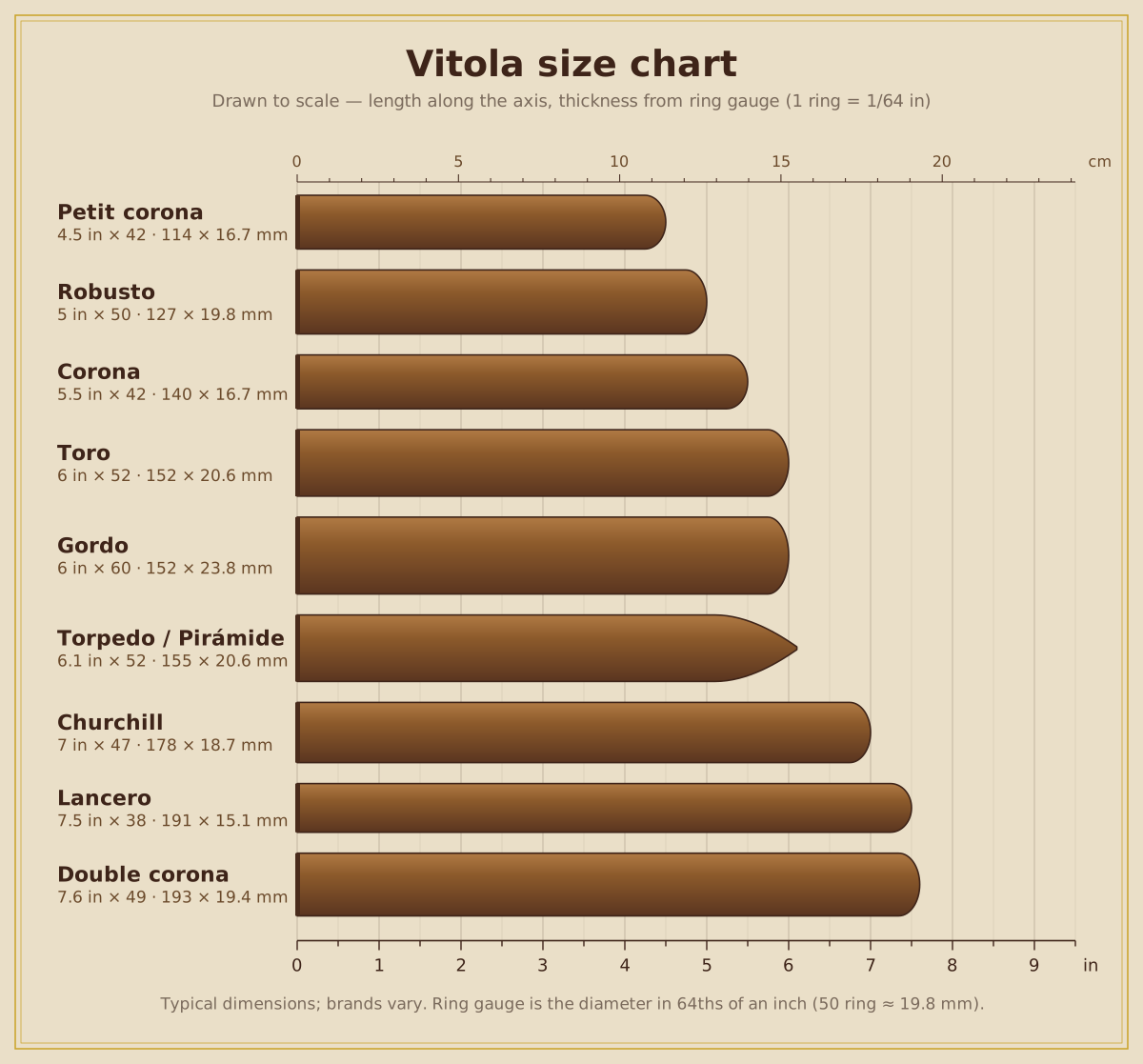
A few well-known examples help anchor the chart. The Montecristo No. 4 is a Mareva. The Montecristo No. 2 is a Pirámide, and the Romeo y Julieta Churchill is a Julieta No. 2. Our reviews of the Montecristo No. 4 and Cohiba Robusto look at two of these sizes in practice.
Robusto vs toro vs churchill
These three sizes cover most of what people smoke today. They share a similar thickness, so the main difference is length, and therefore time.
| Robusto | Toro | Churchill | |
|---|---|---|---|
| Typical size | 5 x 50 | 6 x 50–52 | 7 x 47–48 |
| Smoking time | 45–60 min | 60–90 min | 75–120 min |
| Character | Concentrated, quick to develop | Balanced, more room to evolve | Long, gradual, elegant |
| Best for | A weeknight, a first cigar | A relaxed dinner | A long evening or special occasion |
Robusto
The robusto is short and fairly thick. Because of that, it reaches full flavour quickly and stays rich throughout. It also fits a busy schedule. For many smokers, it is the default choice.
Toro
The toro is basically a longer robusto. That extra inch gives the blend more space to change, so the final third often tastes different from the first. However, it does need a proper block of time.
Churchill
The churchill takes its name from Winston Churchill, who was famous for long cigars. It is slimmer than a toro but much longer. The smoke tends to build slowly. Many smokers save it for a weekend, since it can easily last over an hour and a half.
How size affects flavour and draw
Two cigars made from the same blend can taste quite different in different sizes. The reason is simple geometry. A thin cigar has more wrapper relative to its filler, so the wrapper leaf shapes much of the flavour. A thick cigar holds more filler, so the filler blend takes the lead.
Heat matters too. A slim cigar burns hotter and faster, so it can taste sharper if you puff too often. A fat cigar burns cooler, but it can feel less focused. In addition, ring gauge changes the draw, the ease with which smoke passes through. Larger gauges usually give an easier draw; thin ones give a firmer, tighter pull.
Many experienced smokers think classic sizes around 42 to 50 offer the best balance. That said, taste is personal. The only way to know is to compare the same blend in two sizes.
The trend towards big ring gauges
Over the last two decades, cigars have grown thicker. Sizes of 54, 58 and even 60 or more are now common, especially among non-Cuban brands. These gordos give a cool, voluminous smoke and plenty of time.
Critics argue that very large gauges dilute the wrapper and flatten the flavour. They also note that big cigars need a wide mouth opening and are harder to keep lit evenly. Fans, on the other hand, enjoy the cooler smoke and relaxed pace. Either way, it is worth trying a classic size before deciding that bigger is better.
Big cigars also mean more smoke and more nicotine in a single session. There is no “safe” size. Our guide to cigar health risks explains why.
Choosing cigar sizes for a Malaysian evening
In Malaysia, the practical question is often where and how long you can smoke. Act 852 limits where you can smoke. Eating places are smoke-free, including a 3-metre zone around outdoor tables and chairs. So you may be on a balcony, at a hotel terrace or in a designated cigar room. Our guide to where to smoke cigars in Malaysia covers the options.
With that in mind, here is a simple guide to matching size and setting:
- A short break or a first cigar. Try a petit corona or petit robusto, which fits into 30–45 minutes.
- After dinner on a weeknight. Robustos and coronas suit 45–60 minutes, alongside a kopi or a dram.
- A long weekend evening. Here a toro or churchill rewards a relaxed two hours, especially in a lounge.
The climate matters as well. Outdoors in the evening heat, a cigar can burn faster and taste hotter, so slow your pace. Under strong air-conditioning, the cigar may dry out between puffs, especially a thin one. If you are unsure, a robusto is the safest middle ground.
Where to go next
Size is only one part of a cigar’s character. Next, read about cigar wrappers to see how leaf colour and variety change flavour. Then look at the parts of a cigar to understand what sits inside each size. And when you are ready to light up, our guide on how to smoke a cigar covers pace and technique.
Frequently asked questions
What does ring gauge mean on a cigar?
Ring gauge is the diameter of a cigar measured in 64ths of an inch. A 64 ring gauge cigar is one inch across, and a 50 ring gauge cigar is 50/64 of an inch, or about 20 mm.
What is the most popular cigar size?
The robusto, at around 5 inches with a 50 ring gauge, is widely seen as the most popular premium cigar size. The toro, at about 6 x 50–52, is close behind.
What is the difference between a robusto and a toro?
A toro is usually about an inch longer than a robusto at a similar or slightly thicker ring gauge. That extra length adds roughly 15–30 minutes of smoking time and gives the smoke more time to develop.
How long does it take to smoke a cigar?
It depends on size and pace. A petit corona may last 30–45 minutes, a robusto 45–60 minutes and a churchill 75 minutes to two hours. Puffing slowly, about once a minute, keeps the cigar cool and extends the time.
Does cigar size affect strength?
Size affects how the strength feels more than the strength itself. A thin cigar can taste more intense because it burns hotter and the wrapper is more prominent. A thick one smokes cooler but delivers more total smoke, and therefore more nicotine, over a longer time.