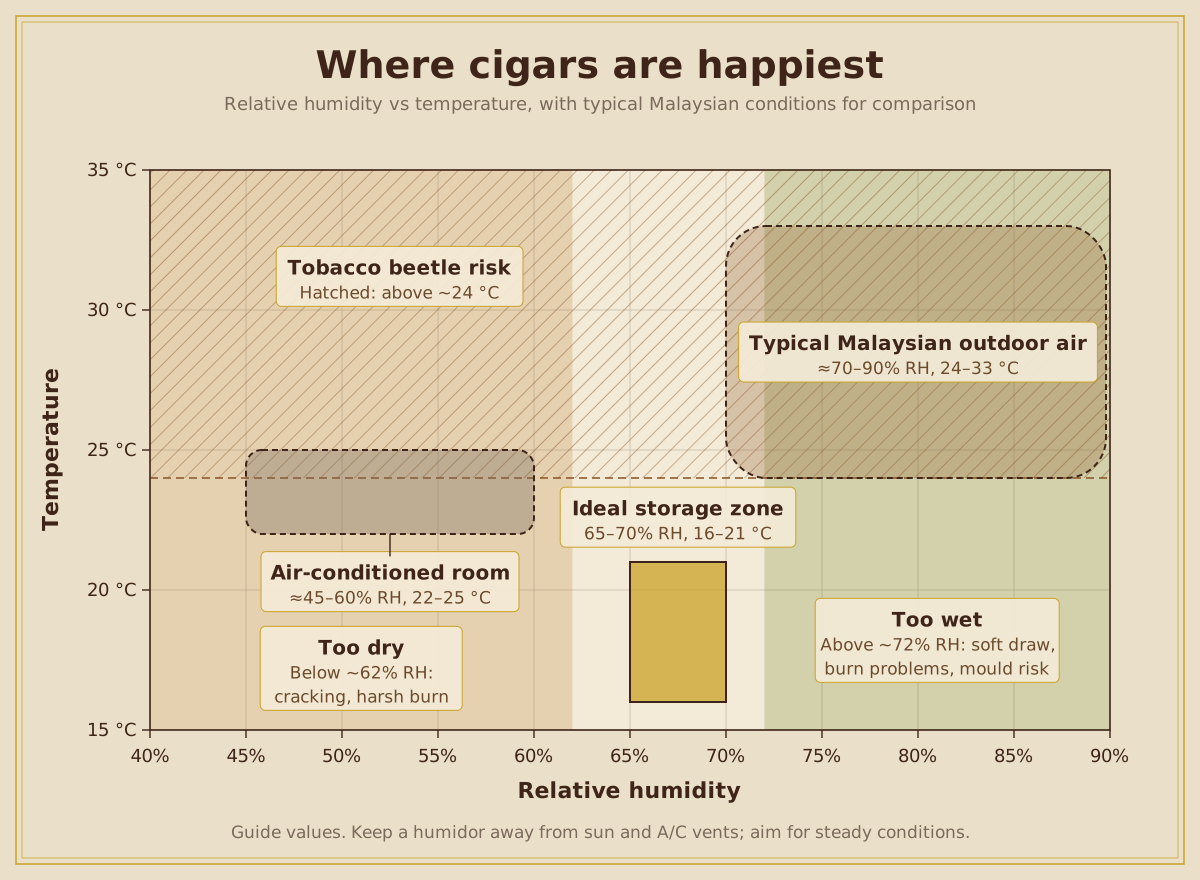
A cigar humidor is a sealed box that keeps cigars at a steady humidity, so they stay supple, burn evenly and age slowly. In Malaysia, it does a harder job than it does in Europe. Outdoors, the air often sits at 70–90% relative humidity (RH) and above 30 °C. Indoors, air-conditioning can pull a room down to around 45–60% RH. A good humidor keeps your cigars between those two extremes.
What is a cigar humidor?
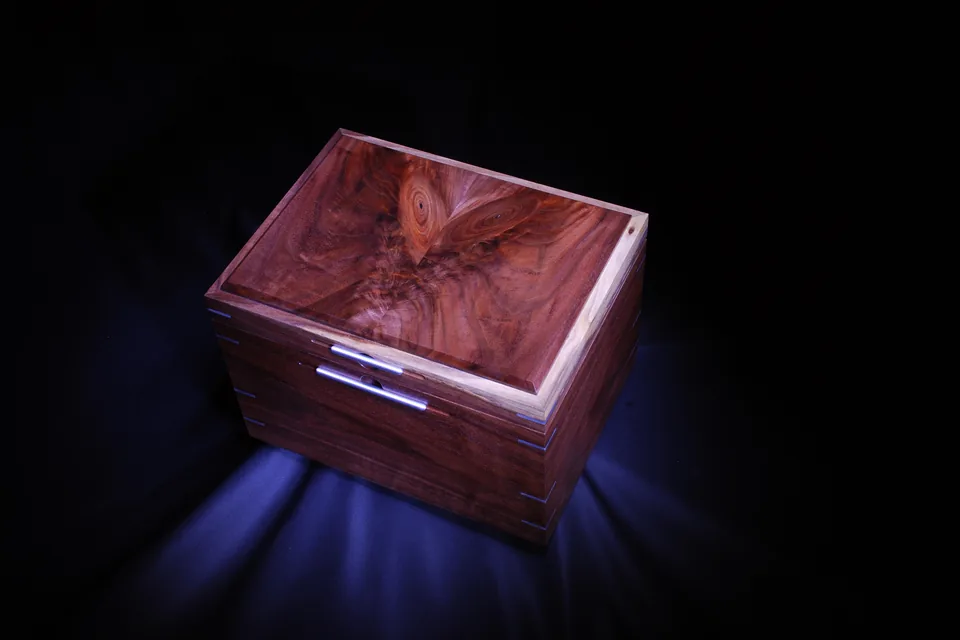
A humidor is any closed container that holds cigars at a controlled humidity. It can be a small desktop box for 25 cigars, a glass-fronted cabinet, or a walk-in room in a lounge. The principle is the same at every size.
Premium cigars leave the factory at a moisture level that suits slow, even burning. If the air around them is too dry, the oils evaporate and the wrapper cracks. If it is too wet, the cigars swell, burn badly and may grow mould. So the humidor’s only job is balance.
Most smokers aim for 65–70% RH at about 18–21 °C. Our guide to the best humidity for cigars explains why some people prefer the lower end, especially for Cuban cigars.
How does a humidor work?
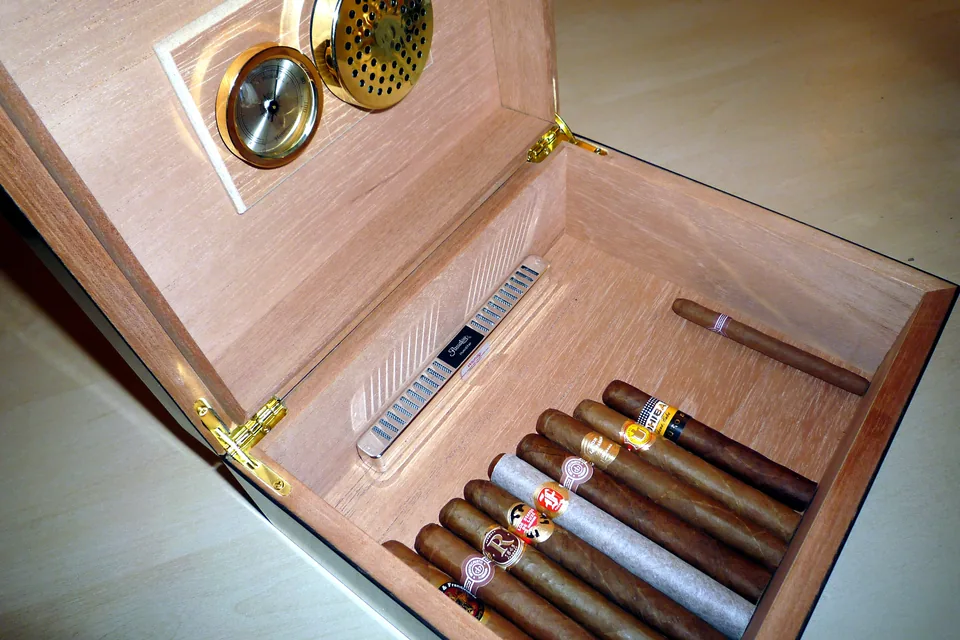
Every working humidor has four parts. Each one does a specific job, and a weak link undoes the others.
- Seal. The lid or door closes tightly, so outside air cannot swap with inside air.
- Humidity source. A humidifier releases water vapour when the air inside dries.
- Buffer. The wooden lining soaks up spare moisture and gives it back later, which smooths out swings.
- Gauge. A hygrometer tells you what is actually happening inside.
Think of it as a small, closed weather system. When you open the lid, dry air-con air rushes in. Then the cedar and the humidifier slowly bring the box back to its set point. That recovery is why you should open a cigar humidor briefly and close it again quickly.
Why Spanish cedar lines most humidors
Spanish cedar (Cedrela odorata) is not Spanish, and it is not a true cedar. It is a tropical hardwood from Central and South America, related to mahogany. Still, it has three traits that make it the classic humidor wood.
- Moisture buffer. The wood absorbs water vapour when the air is damp and releases it when the air dries.
- Stability. It resists warping and cracking in humid conditions, which matters in a tropical home.
- Aroma. Its gentle, spicy aroma suits tobacco. Many cigar boxes use it for the same reason.
Some humidors use other woods, such as Honduran mahogany or American red cedar. However, avoid aromatic woods with strong oils, because they can taint the cigars. A lacquered or varnished interior is also a poor sign, since the coating stops the wood from breathing.
Before first use, every wooden box needs seasoning. Seasoning means raising the moisture in the wood, so it does not suck water out of your cigars.
Seals, hinges and build quality
The seal matters more than the outer finish. A good cigar humidor has a tight lid that closes with a soft cushion of air. Here are simple checks before you trust any box.
- The dollar-bill test. Close the lid on a strip of paper. If it slides out easily, the seal is weak.
- The lid drop. Lift the lid a few centimetres and let go. A well-sealed lid falls slowly as the air escapes.
- Thick walls. Thicker sides hold temperature and humidity better than thin veneers.
- Solid hinges. Weak hinges let the lid sag, which opens a gap at the back.
Humidification devices compared
The humidifier is the engine of the humidor. Each type has a different mix of effort, accuracy and cost.
| Type | How it works | Effort | Best for | Watch out for |
|---|---|---|---|---|
| Foam or sponge | Floral foam or sponge soaked in distilled water or PG solution | Refill often | Small, older boxes | Over-humidifying; mould if dirty |
| Crystal gel | Polymer crystals swell with water and release it slowly | Refill every few weeks | Desktop boxes | Crystals can harden and stop working |
| Humidity beads | Silica beads set to hold a fixed RH, such as 65% or 70% | Re-wet occasionally | Tupperdors, coolers, cabinets | Need distilled water only |
| Two-way packs | Sealed salt-and-water packs that add or absorb moisture | Replace every few months | Almost any humidor | Running cost over time |
| Electronic | Fan unit with a sensor and water tank | Refill tank; check power | Large cabinets and rooms | Power cuts, noise, upkeep |
Only beads and two-way humidity packs can absorb moisture as well as release it. That two-way action is useful in Malaysia, because a humid day can push moisture into a leaky box.
Distilled water or propylene glycol solution?
Use distilled water in every device, never tap water. Tap water leaves minerals behind and can carry microbes. Some sponge and foam humidifiers use a propylene glycol (PG) solution, sold ready-mixed for humidors. PG helps hold the humidity near 70% and slows mould. Even so, always follow the device maker’s instructions, because some beads and gels must never touch PG.
Hygrometers: trust, but verify
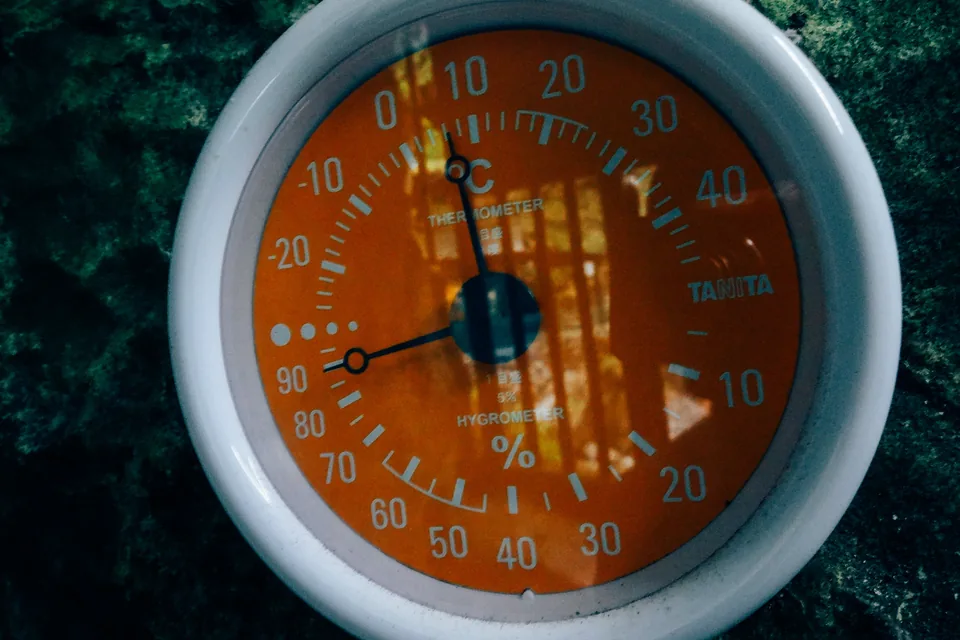
A hygrometer measures relative humidity. Analogue dials look classic, but many drift by several points. Digital units are usually more accurate and often show temperature too. Either way, calibrate your gauge when it is new and every few months after that.
Our cigar hygrometer guide walks through the salt test and the 75% calibration pack method step by step.
Sizes and capacity
Humidor capacity is usually listed for a standard size, such as a robusto. In practice, you will fit fewer cigars if you keep larger sizes or whole boxes. A good rule is to choose capacity for about twice what you think you need, since collections tend to grow.
| Capacity | Typical form | Suits |
|---|---|---|
| 10–25 cigars | Small desktop box | A few cigars for the month |
| 50–100 cigars | Large desktop box | A regular smoker with a small rotation |
| 150–300 cigars | Cabinet or wineador | Ageing boxes and a varied collection |
| 300+ cigars | Large cabinet, electronic unit or room | Serious collectors and lounges |
Leave some empty space too. Air needs to circulate around the cigars, so a crammed box holds humidity less evenly.
Desktop, cabinet, wineador or electronic: the cooling question
In temperate countries, the main problem is dry winter air. In Malaysia, the main problem is heat. Tobacco beetle eggs hatch far more readily when it is warm and humid. Tobacconist University notes that they typically hatch above about 23 °C. So the type of cigar humidor you choose depends largely on where it will sit.
| Type | Cooling | Pros | Cons |
|---|---|---|---|
| Desktop wooden box | None | Simple, classic, quiet | Only as cool as the room |
| Cabinet humidor | None | Large capacity, display | Still depends on room temperature |
| Wineador (wine cooler + humidity) | Thermoelectric or compressor | Cools and holds cigars in one unit | Needs added humidity; compressor units dry the air |
| Electronic humidor | Built-in cooling and humidity control | Precise, hands-off | Higher cost, power use, repairs |
A wineador is a wine cooler that people convert for cigars. Thermoelectric (Peltier) coolers are quiet and dry the air less than compressor units. However, they can only cool a limited amount below room temperature. In a hot room, they struggle. Compressor units cool better, but they pull moisture out as they run, so they need a strong humidity source.
Malaysia tip
If your home stays below about 24 °C, a simple wooden box or sealed tupperdor is enough. If the room heats up when the air-con is off, consider a cooled option, or keep cigars in the coolest room of the house.
Where to place a humidor in a Malaysian home
Placement does as much as the box itself. A few simple rules go a long way.
- Keep it out of the sun. Direct light heats the box and fades the wood.
- Avoid air-con vents. The cold, dry draught pulls moisture through any small gap.
- Pick an inside wall. Outer walls warm up in the afternoon sun.
- Stay away from kitchens. Cooking smells and heat travel into cedar.
- Think about power cuts. Electronic units stop working during an outage, so check them afterwards.
Many Malaysian smokers keep a humidor in a bedroom that runs air-con at night. That is fine, as long as the box stays sealed and you check the hygrometer often. During haze season, keep the lid closed and open it only in a clean, closed room.
Maintenance and what to avoid
A cigar humidor needs a few minutes of care each week. Check the hygrometer, top up the humidifier and look over the cigars for spots, holes or dust.
Also, rotate cigars now and then, so those at the bottom get the same air as those at the top. Wipe up any water spills with a clean cloth. Every few months, recalibrate the hygrometer.
Avoid these common mistakes:
- Tap water. It leaves deposits and invites mould.
- Wiping cedar with chemical cleaners. The wood absorbs the smell.
- Storing other tobacco types together. Flavoured cigarillos can scent premium cigars.
- Ignoring heat. A perfect 69% RH at 28 °C still invites beetles.
If you spot fuzzy spots or tiny holes, read our guide to cigar mould, plume and beetles before you do anything else.
Next steps
A humidor is only one part of good storage. Our pillar guide on how to store cigars brings it all together for the tropics, from short-term storage to long-term ageing. If you want a low-cost start, our tupperdor guide shows how to build a sealed box that suits Malaysian homes very well.
Frequently asked questions
What is a humidor?
A humidor is a closed box, cabinet or room that keeps cigars at a controlled relative humidity, usually 65–70%. It has a seal, a humidity source and ideally a hygrometer, so the cigars stay supple and age slowly.
How does a humidor work?
The humidifier releases water vapour into a sealed space. The cedar lining absorbs extra moisture and releases it when the air dries, which smooths out swings. A good seal stops the outside air from undoing that balance.
Do I need a humidor in Malaysia when the air is already humid?
Usually, yes. Outdoor air at 80–90% RH is too wet and often too hot, while air-conditioned rooms can drop to around 45–60% RH. A humidor, or a sealed tupperdor, keeps cigars between those extremes.
What temperature should a cigar humidor be?
Aim for roughly 18–21 °C, and try to stay below about 24 °C. Tobacco beetle eggs hatch more readily in warm, humid conditions, so a cool room matters so much in Malaysia.
Can I use tap water in a humidor?
No. Tap water leaves mineral deposits and can carry microbes that encourage mould. Use distilled water, or a propylene glycol solution made for humidors.