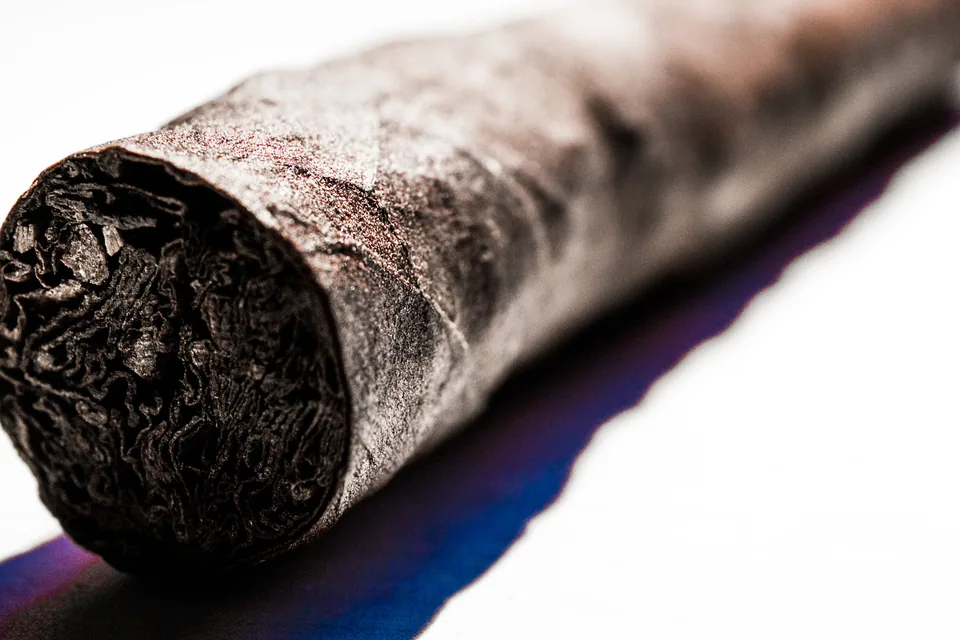
This guide to cigars for beginners covers everything you need before your first premium cigar, from choosing a mild one to finishing it calmly. Cigars are not cigarettes. You smoke them slowly, you do not inhale, and the whole point is flavour. A little knowledge up front turns a harsh, confusing hour into a pleasant one. We also cover what is different about smoking in Malaysia, from the humidity to the law.
What a premium cigar actually is
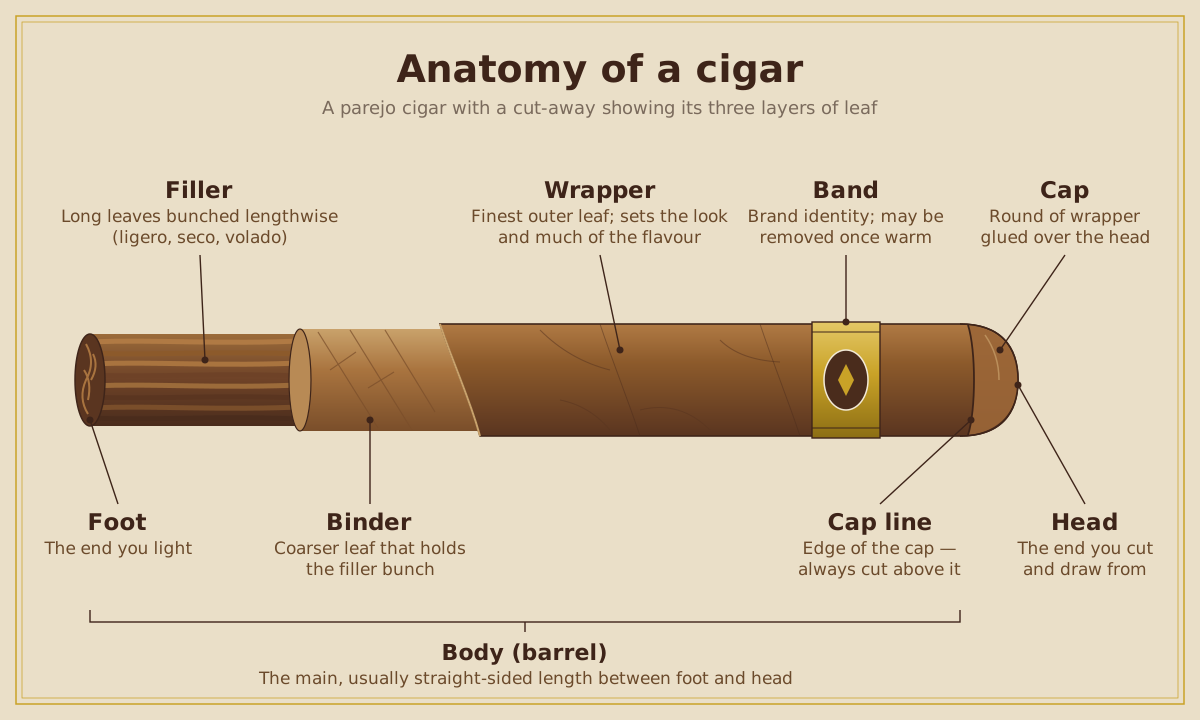
A premium cigar is a roll of whole tobacco leaves, usually made by hand. It has three parts. The filler is the core of folded leaves that gives most of the flavour. The binder is a sturdy leaf that holds the filler together. Finally, the wrapper is the fine, smooth outer leaf you see.
At one end sits the head, closed with a small round cap. That is the end you cut and put in your mouth. At the other end is the foot, the open end you light. Most cigars also carry a paper band that names the brand.
Premium cigars use long-filler tobacco, meaning whole leaves that run the full length of the cigar. In contrast, cheaper machine-made cigars and many cigarillos use chopped tobacco and sometimes paper or homogenised leaf. They burn hotter and taste flatter. Our guide to hand-rolled vs machine-made cigars explains the difference in detail, and our parts of a cigar guide goes deeper into each leaf.
Cigars vs cigarettes
A cigarette is fast, inhaled and built to deliver nicotine. A cigar is the opposite. It lasts from half an hour to two hours, and you draw smoke into your mouth only. People smoke cigars for taste and for the ritual: an unhurried hour, often with a drink and good company. That said, cigars still carry real health risks, which we cover honestly below.
Choosing cigars for beginners: four simple rules
Choosing well matters more than any technique. Most bad first experiences come from a cigar that was too strong, too big or badly stored. So keep it simple. Good cigars for beginners share four traits: gentle strength, a soft wrapper, a modest size and a sensible price.
Pick mild to medium strength
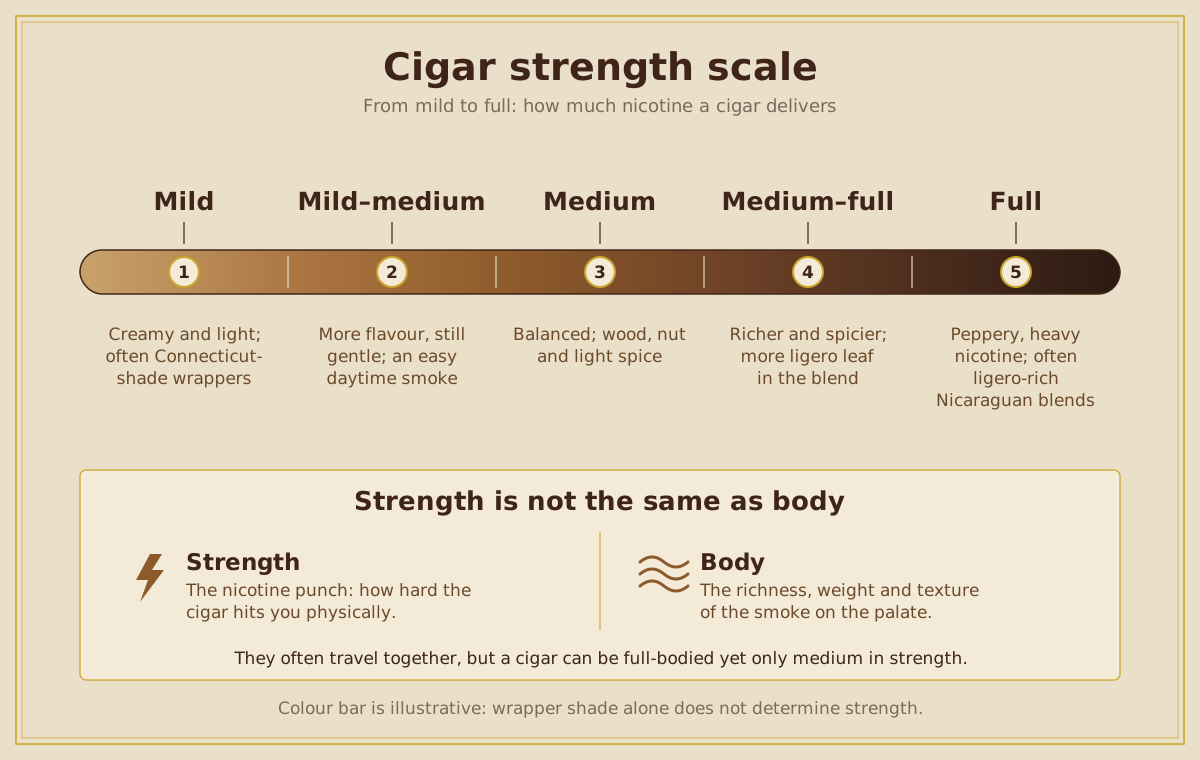
Strength is about the nicotine hit. Body is about how rich and heavy the smoke feels. With cigars for beginners, you want both on the gentle side. A mild cigar lets you notice flavours such as cream, cedar, nuts and light coffee without feeling dizzy. Our cigar strength chart explains the scale in more detail.
Choose a gentle wrapper
The wrapper is only a small share of the tobacco, but it shapes much of the first impression. Two wrapper styles suit new smokers especially well, which is why they appear on so many lists of mild cigars for beginners.
- Connecticut shade. A pale, golden leaf grown under cloth, originally in the Connecticut River Valley in the United States. It is usually smooth, creamy and mild.
- Cameroon. A thin, slightly toothy leaf from West Africa. It tends to be gently sweet and woody, with a little spice.
Darker wrappers, such as maduro, are not always strong. Still, they often taste richer and heavier, so they make a better second or third step. Our guide to cigar wrappers covers every main shade.
Go small, not huge
Ring gauge is the cigar’s diameter in 64ths of an inch. A 50 ring gauge cigar is 50/64 of an inch across. For a first cigar, stay somewhere around 40 to 50. Thinner cigars are easier to keep lit and to finish. Huge cigars, by contrast, take two hours or more and can wear out a new smoker.
A good target is a cigar that lasts about 45 minutes. In practice, that means a corona, a petit corona or a short robusto. Our full cigar sizes chart lists the common formats and their dimensions.
Spend sensibly
A first cigar does not need to be rare or costly. Expensive cigars are often stronger, larger or aged for experienced palates. You will also enjoy them more once you know what to look for. Our guide to the most expensive cigars explains why some cost so much. Meanwhile, for prices in Malaysia, see our explainer on cigar prices in Malaysia, which covers excise duty and typical ranges.
The best cigars for beginners, by style
The table below shows styles that tend to suit new smokers. These are categories, not shop picks. Within each, we name a few long-running lines that are widely known for a milder profile.
| Style | Typical strength | Common sizes | Flavour you can expect | Widely known examples |
|---|---|---|---|---|
| Connecticut shade wrapper | Mild | Corona, robusto | Cream, cedar, almond, light coffee | Macanudo Café, Ashton Classic |
| Cameroon wrapper | Mild to medium | Corona, robusto | Gentle sweetness, wood, soft spice | Arturo Fuente Cameroon-wrapped lines |
| Mild Cuban vitolas | Mild to medium | Petit corona, half corona | Hay, light earth, honey, cedar | H. Upmann Half Corona, Hoyo de Monterrey Epicure range |
| Dominican mild blends | Mild to medium | Robusto, toro | Smooth, nutty, toasty | Davidoff Signature line |
| Small cigars and cigarillos | Varies | Short, thin | Simple, quick, often lighter | See our cigarillos guide |
Strength labels are not standard across brands. One maker’s “medium” can feel strong to someone else. So treat any label as a guide, and judge by how you feel. You can read neutral profiles of these makers in our pages on Macanudo, Ashton, Davidoff and Hoyo de Monterrey.
Should a beginner start with Cuban cigars?
Many Malaysians start with Cuban cigars, because they are legal here and the names are familiar. That is fine, but go in with open eyes. Many Cuban blends lean medium or stronger. Also, quality can vary from box to box. A small, mild Cuban such as a half corona can be a lovely start. For a bigger picture, our guide to types of cigars and our page on Cuban cigars explain how origins differ.
Cutting, lighting and smoking basics
Once you have a cigar, three skills matter: the cut, the light and the pace. Each has its own detailed guide. Here is the short version.
Cut just the cap
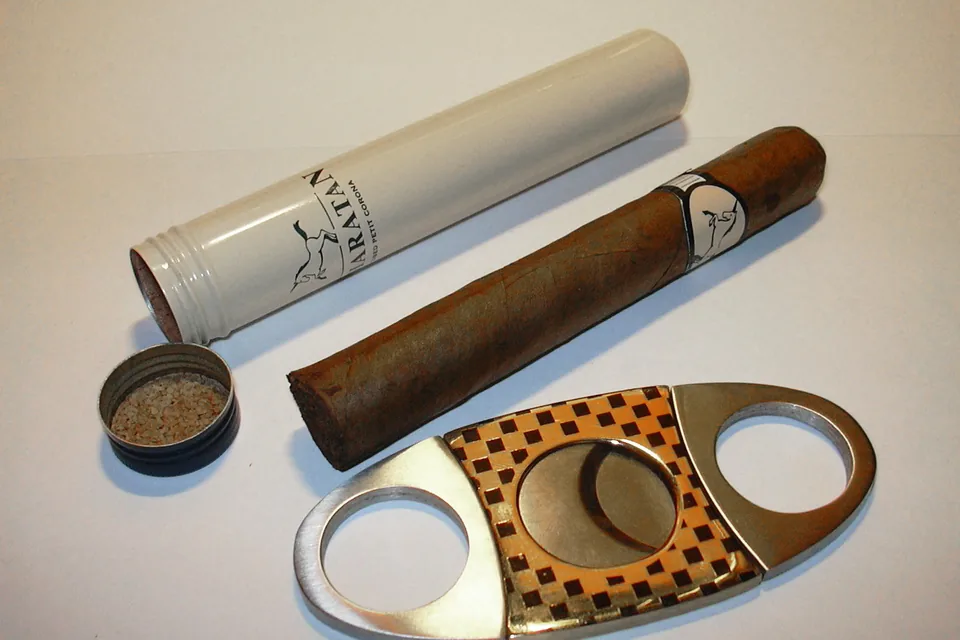
Use a sharp double-blade guillotine and remove about 1.5 to 2 mm from the head. Stay above the cap line, the faint seam where the cap meets the wrapper. Cut in one quick motion, then draw air through the unlit cigar to test it. For every cut type, see how to cut a cigar.
Toast, then light
Hold the foot just above a soft flame or the tip of a torch, and rotate it until the edge glows evenly. Then put the cigar to your lips and draw gently while you keep turning it. Avoid petrol lighters, because the fuel can taint the taste. Our guide on how to light a cigar covers torches, matches and cedar spills.
Puff slowly and enjoy it
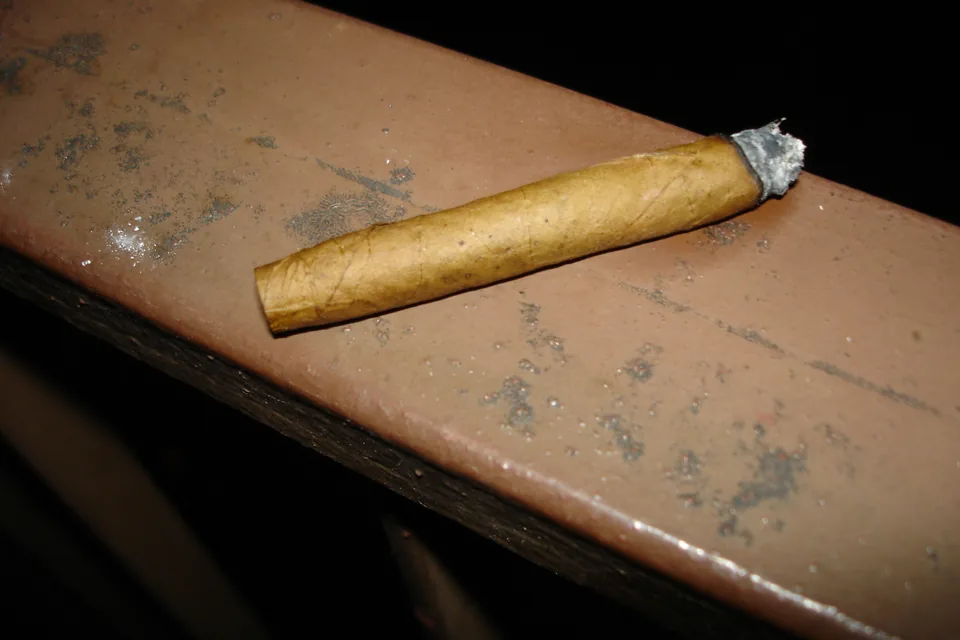
Draw smoke into your mouth, hold it for a moment, taste it, then let it go. Aim for about one puff a minute. In between, rest the cigar in an ashtray. If it goes out, that is normal. Simply knock off the ash, toast the foot again and relight. Our step-by-step guide on how to smoke a cigar covers holding, ashing and when to stop.
Don’t inhale: the most important rule
Cigar smoke is not meant to go into your lungs. Instead, you hold it in your mouth, where your tongue and palate pick up the flavour. The nicotine is absorbed through the lining of the mouth. Inhaling cigar smoke is harsh, can cause heavy coughing and makes nicotine sickness far more likely.
Some smokers later learn to retrohale, which means gently pushing a little smoke out through the nose to smell it. It can reveal more flavour, but it can also sting. Try it only once you are comfortable. Our article answering do you inhale cigars explains the reasoning and the risks.
Pacing yourself and avoiding nicotine sickness
Nicotine sickness is the classic trap for anyone new to cigar smoking. It usually shows up as dizziness, sweating, a pale face, a racing heart or nausea. The causes are simple. You smoked on an empty stomach, you puffed too fast, or the cigar was too strong for you.
How to prevent it
- Eat first. A proper meal before you smoke helps a lot.
- Drink water. Keep a glass nearby, especially in Malaysia’s heat.
- Slow down. One puff a minute is plenty. Long gaps are fine.
- Choose mild. A gentle cigar gives you room to learn.
- Stop early. You do not have to finish a cigar. Putting it down halfway is normal.
What to do if it happens
Put the cigar down straight away. Then sit somewhere cool, drink water and eat something. Many smokers report that a sugary drink or a sweet helps them recover. The feeling usually passes in under an hour. However, if you have chest pain, trouble breathing or you faint, seek medical help immediately.
Storing cigars in Malaysia’s humidity
Cigars are a natural product. They like a stable climate of roughly 65 to 70 per cent relative humidity and a temperature in the low twenties Celsius. Malaysia makes that tricky in two opposite ways.
Outdoors, the air often sits between 70 and 90 per cent humidity, with heat above 30°C. A cigar left in a hot car or on a terrace can swell, go soft, burn badly or grow mould. Heat also raises the risk of tobacco beetles, tiny pests that hatch in warm conditions and bore through cigars. Indoors, on the other hand, air-conditioning dries the air quickly. A cigar left under the vent can turn brittle and crack within days.
Simple storage for a beginner
If you only have one or two cigars, smoke them within a few days. Keep them in their cellophane, inside a sealed plastic container, in a cool room away from direct sun and the air-con outlet. For longer storage, a sealed container with a two-way humidity pack, often called a tupperdor, is a simple, low-cost start. Packs rated at 65 or 69 per cent suit the tropics well. Our Boveda packs guide explains how they work.
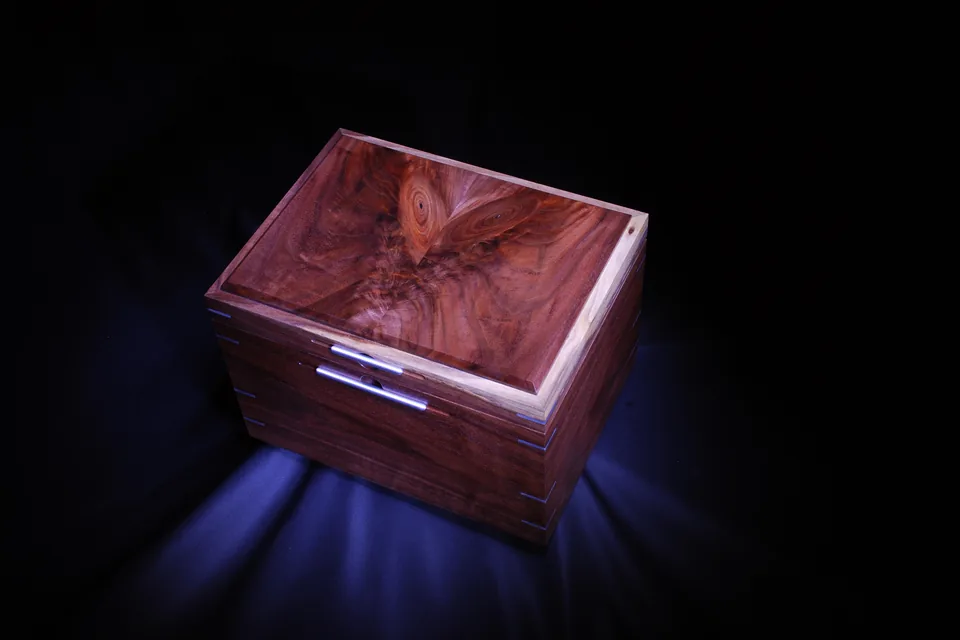
When you collect more cigars, consider a proper humidor. Our pillar guide on how to store cigars explains every option for tropical climates. For a deeper look at the numbers, see the best humidity for cigars and our guide to mould, plume and beetles.
The tools you need to start
You need very little kit. In fact, three items cover almost everything. First, a sharp double-blade guillotine cutter. Second, a flame: a single or double torch lighter, a soft-flame butane lighter or long wooden matches. Third, a proper cigar ashtray with wide rests, so the cigar can sit level between puffs.
Later, you may add a travel case, a punch cutter or a small humidor. None of that is needed for your first few cigars for beginners. Our guides to cigar cutters, cigar lighters and cigar ashtrays compare the designs without pointing you to any shop.
Common beginner mistakes
Most first-cigar problems repeat themselves. Here are the ones to avoid.
- Choosing by reputation. A famous, full-bodied cigar is often the wrong first choice. Start gentle instead.
- Puffing like a cigarette. Rapid puffs overheat the tobacco and make it bitter.
- Lighting with a big, sooty flame. Candles, stove burners and petrol lighters add off-flavours.
- Tapping the ash too often. A short layer of ash protects the burning tip and keeps it cool.
- Ignoring storage. A dry or damp cigar burns badly, however good it was on the day you got it.
- Smoking on an empty stomach. This is the fastest route to nicotine sickness.
Avoid these, and most cigars for beginners will treat you well. If something still goes wrong, it is rarely your fault alone. Even well-made cigars sometimes have a tight draw or an uneven burn.
Basic cigar etiquette
Good manners around cigars are mostly common sense. They also make you welcome in lounges and at events.
- Ask before you light. Check with the host and with anyone near you.
- Let the ash fall naturally. Tap gently over an ashtray, rather than flicking.
- Never stub it out. Simply rest the cigar in the ashtray and it will go out by itself, with far less smell.
- Mind the smoke. Blow it away from others, and step further away from non-smokers.
- Accept gifts gracefully. If someone offers you a cigar, thank them and ask about it. It is a good way to learn.
As for the band, you can leave it on or take it off once the cigar has warmed up and the glue has softened. For lounge manners, gifting and Malaysian customs such as Ramadan sensitivity, see our full guide to cigar etiquette.
Where you can legally smoke in Malaysia
Malaysia has strict smoke-free rules. The Control of Smoking Products for Public Health Act 2024, known as Act 852, lists many non-smoking areas. These include air-conditioned premises, eateries, public transport, hospitals, lifts and many workplaces. At eateries, the health ministry has restated the three-metre rule, which bars smoking within three metres of any table or chair. Fines can be heavy.
In general, that leaves private homes (subject to building or condo rules), dedicated smoking areas, and some hotel or private cigar rooms that operate within the law. Rules change, so check before you light up. Our guide to where to smoke cigars explains the options, while our explainer on cigar laws in Malaysia covers the Act in detail. If you are flying in, read bringing cigars into Malaysia before you pack.
Keep it legal
Malaysian law sets a minimum age for smoking products and bans their advertising and online sale. This guide is independent editorial information, not a recommendation to start smoking.
The honest health picture
Cigars are not a safe alternative to cigarettes. According to the US National Cancer Institute, cigar smoke contains the same toxic and cancer-causing chemicals as cigarette smoke. Even without inhaling, smokers expose their lips, mouth, tongue, throat and larynx to it. Regular cigar smokers face oral and oesophageal cancer risks similar to those of cigarette smokers.
Nicotine is also addictive, and the NCI notes that a single large cigar can contain as much nicotine as a pack of cigarettes. The World Health Organization states plainly that every form of tobacco is harmful. If you choose to smoke cigars, smoking less often lowers your exposure. Still, it never removes the risk. Read our full guide to cigar health risks and our comparison of cigars vs cigarettes.
Your first-cigar checklist
Before you light up for the first time, run through this list.
- Pick mild. Choose a mild to medium cigar with a Connecticut or Cameroon wrapper.
- Pick small. Aim for a corona, petit corona or robusto that lasts about 45 minutes.
- Check its condition. It should feel firm but slightly springy, with no cracks or soft spots.
- Eat first. Have a proper meal, and keep water within reach.
- Find a legal spot. Choose a place where smoking is allowed and nobody minds the smoke.
- Gather your tools. Bring a sharp cutter, a torch or soft flame, and an ashtray.
- Cut just the cap. Remove 1.5 to 2 mm and test the draw.
- Toast, then light. Warm the foot evenly before you draw.
- Puff slowly, and never inhale. One puff a minute, smoke in the mouth only.
- Stop when you like. Rest it in the ashtray and let it go out on its own.
What to learn next
Once your first few cigars feel easy, the hobby opens up. Next, learn how to taste a cigar to put names to the flavours you notice. Then try a classic cigar pairing, such as kopi, teh tarik, rum or whisky. After that, our types of cigars guide explains shapes and styles, so you can explore with confidence.
All of these sit in our Cigar 101 guides, and unfamiliar words are explained in the glossary. Above all, take it slowly. The best part of cigars for beginners is that every cigar teaches you something new.
Frequently asked questions
What is the best cigar for beginners?
There is no single best one. A good first cigar is mild to medium in strength, has a Connecticut or Cameroon wrapper, and is small enough to finish in about 45 minutes, such as a corona or robusto. Our cigar strength chart explains how to read strength labels.
Do you inhale cigar smoke?
No. Cigar smoke is meant to stay in your mouth, where you taste it before letting it go. Inhaling it into the lungs is harsh and harmful. Our guide on whether you inhale cigars explains why.
How long does it take to smoke a cigar?
It depends on the size. A petit corona takes roughly 30 to 45 minutes, a robusto 45 to 60 minutes, and a Churchill well over an hour. Smoke slowly, at about one puff a minute.
Why do I feel sick after smoking a cigar?
Usually it is nicotine. Smoking on an empty stomach, puffing too fast or choosing a strong cigar can cause dizziness, sweating and nausea. Put the cigar down, drink water, eat something sweet and rest. Next time, pick a milder cigar.
Can beginners smoke Cuban cigars?
Yes, but many Cuban cigars are medium or stronger, and quality can vary between boxes. A mild, small Cuban vitola can work well. A consistent mild non-Cuban cigar is often an easier first step.
How old do you have to be to smoke cigars in Malaysia?
Malaysian law sets a minimum age for the sale and use of smoking products. Check our guide to cigar laws in Malaysia for the current rules under Act 852.