The cigar price Malaysia smokers pay often surprises newcomers and visitors. Yet the number on the label is not random. It is the result of a tax charged by weight, a government-approved price system, and the costs of selling a tightly regulated product. This page explains each layer, so you can understand a price tag without anyone selling you anything.
About this page
We do not list shop prices, and we do not say where to find cigars. Malaysian law bans tobacco advertising and promotion. This is an editorial explainer of the official building blocks behind prices.
Layer one: excise duty by weight
The first layer of any cigar price Malaysia shoppers see is tax. The biggest single tax you can see in the law is excise duty. Under the Excise Duties Order 2025, P.U.(A) 389/2025, cigars, cheroots and cigarillos containing tobacco carry RM440 per kilogram. The rate took effect on 1 November 2025. Before that, the 2022 Order set it at RM400 per kilogram.
Cigarettes work differently. They pay a rate per stick, currently 42 sen. Cigars, by contrast, pay by weight. As a result, a large, heavy cigar carries more excise than a slim one, even from the same brand.
The manufacturer or importer pays the excise, not the shopper directly. Even so, it flows straight into the shelf price.
Excise per cigar: the arithmetic
RM440 per kilogram works out to 44 sen per gram. The table below applies that rate to some typical weights. The weights are rough, illustrative figures, because real cigars vary with size, density and tobacco.
| Example cigar (illustrative weight) | Excise at RM440/kg | Excise at the old RM400/kg |
|---|---|---|
| Slim cigarillo, about 3 g | about RM1.32 | about RM1.20 |
| Corona-sized, about 7 g | about RM3.08 | about RM2.80 |
| Robusto-sized, about 10 g | about RM4.40 | about RM4.00 |
| Large toro or Churchill, about 15 g | about RM6.60 | about RM6.00 |
| Big gordo, about 20 g | about RM8.80 | about RM8.00 |
This is our arithmetic, not an official figure
We multiplied the published per-kilogram rate by example weights. Customs assesses duty on the actual goods. Import duty and sales tax come on top, and so do the importer’s and retailer’s costs.
So the 2025 rise added roughly 40 sen of excise to a 10 g cigar. That is small next to a premium cigar’s full price. Still, it shows why size matters. If you want to see how dimensions translate into weight, our guide to cigar sizes explains length and ring gauge.
Layer two: import duty and sales tax
Imported cigars may also face import duty and sales tax. We could not verify the current official rates for cigars. For that reason, we do not print a figure here, even though some third-party websites do. The Customs duty and excise pages and the MySST portal hold the official rate orders.
One point is certain, though. Malaysia has no VAT or GST. It replaced GST with the Sales and Service Tax in 2018, so any source that mentions VAT on Malaysian cigars is wrong.
Layer three: MOH-approved retail prices
Here Malaysia differs from many markets. Under Act 852, the retail or minimum price of a tobacco product is a matter of law. Section 14 says that price includes excise and other taxes.
The detail sits in the Control of Sale Regulations:
- Approval. Under regulation 8, the Director-General of Health must approve retail prices. Every packet must carry the approved price label.
- Tax rises. When excise or tax goes up, the importer must reapply within 7 days. The new price must rise by at least the full tax increase, rounded up to the nearest 10 sen.
- A legal floor. Regulation 9 sets a minimum price of RM12 per packet of cigars. If MOH has approved a higher price, that higher price applies.
In other words, a seller cannot absorb a tax increase to keep prices flat. The law requires it to reach the customer. For context, the GATS 2023 survey found an average cost of RM10.80 for 20 manufactured cigarettes, according to the GATS Malaysia fact sheet. So the RM12 floor for a packet of cigars sits above that figure.
Layer four: registration and compliance
Every tobacco product must be registered before anyone imports or distributes it, under section 3 of Act 852. The Registration Regulations set the fee at RM5,000 per product application.
That fee affects some cigars more than others. A popular line sold in large volumes spreads the cost thinly. A rare size that sells only a few boxes a year carries far more of it per box. We have not measured the effect on prices, but the logic explains why importers may stock fewer niche cigars.
Packaging adds cost too. Each pack needs the prescribed graphic health warnings and particulars in Malay. Boxes made for other markets need these Malaysian warnings before sale.
Other costs in the cigar price Malaysia smokers see
Taxes and rules are not the whole story. Several ordinary business costs also feed in:
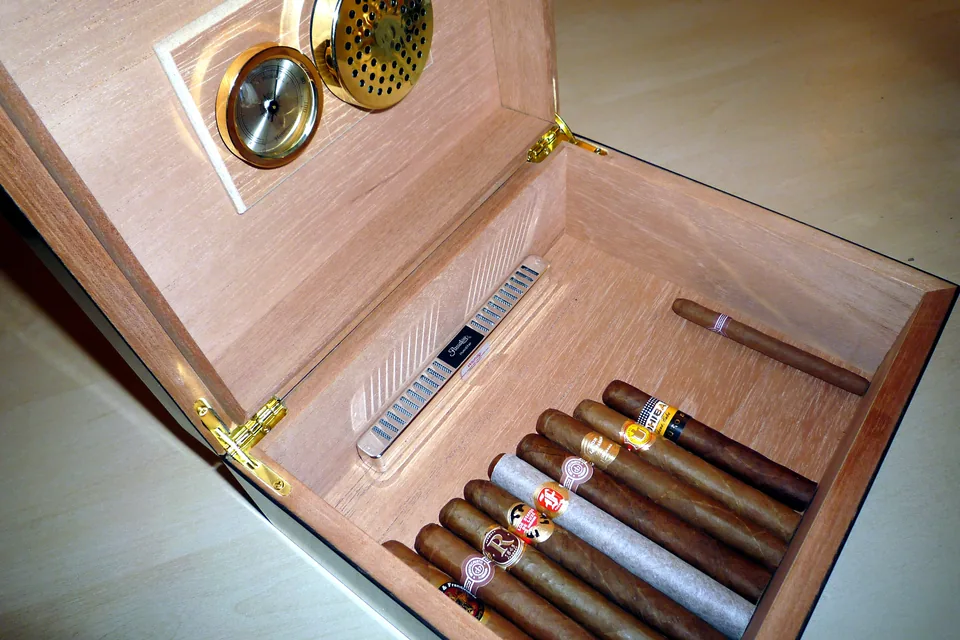
- Climate control. Cigars need roughly 65–70% humidity and cool storage. In Malaysia’s heat, that means air-conditioned humidors running all year. Our guide to how to store cigars explains why.
- Small volumes. Malaysia’s premium cigar market is small, so importers ship in small lots.
- No online sale or advertising. Online sale is banned, and so is advertising. Sellers rely on physical premises and staff.
- Global supply. Popular cigars, including some Cuban lines, can be in short supply worldwide.
Cuban vs New World pricing
Cuban cigars are legal in Malaysia. Habanos reach the country through The Pacific Cigar Company, the exclusive distributor for Asia-Pacific. Cigars from Nicaragua, the Dominican Republic and Honduras arrive through several independent importers.
Both groups pay the same excise rate by weight. So differences come mostly from the cigars themselves: list prices at origin, scarcity, ageing and demand. Limited releases sit at the top end. For example, the Malaysia regional edition, the San Cristóbal de La Habana Harimau Malaya, was reported at RM2,300 for a box of 10 in 2021 by Robb Report Malaysia. That is a press report, not a current price.
Our guides to Cuban cigars and the most expensive cigars explain what drives value at origin.
How Malaysia compares with Singapore
Singapore is the comparison many readers make. Singapore Customs grants no duty-free concession on tobacco, and travellers must declare all tobacco and pay duty and GST. We have not verified current rates for Singapore or Hong Kong cigars, so we do not compare prices in figures. Both markets do treat tobacco as a heavily taxed product, as Malaysia does. Our page on bringing cigars into Malaysia covers what happens at the border.
When a price is too good to be true
The flip side of high legal prices is a market for fakes and smuggled stock. A box of famous Cuban cigars at a fraction of the usual price is a red flag, not a find. Legal stock in Malaysia must be registered, carry Malaysian graphic health warnings, and show an approved price label.
Watch for missing Malay warnings, missing price labels, and offers made online or through social media. Online sale is itself illegal. Counterfeit cigars may also contain poor or unknown tobacco. Our guide to fake Cuban cigars shows what to look for.
The bottom line
A high cigar price in Malaysia is largely shaped by policy. Tax by weight, government-approved prices and registration costs all push it up, by design. The aim is public health, and cigars carry real health risks. For the wider legal picture, see our guide to Act 852, or start from our complete guide to cigars in Malaysia.
Frequently asked questions
Why are cigars so expensive in Malaysia?
Several layers stack up in the cigar price Malaysia smokers pay. Excise duty is RM440 per kilogram, import duty and sales tax may apply, every product must be registered at RM5,000 per application, and MOH must approve retail prices. On top of that come shipping, careful storage in the tropics and the costs of a small, specialist market.
How much excise is on one cigar in Malaysia?
It depends on weight. At RM440 per kilogram, the excise is 44 sen per gram. So a 5 g cigar carries about RM2.20 and a 15 g cigar about RM6.60. This is our arithmetic from the published rate, not an official per-stick figure.
What is the minimum cigar price in Malaysia?
Regulation 9 of the Control of Sale Regulations 2024 sets a minimum of RM12 per packet of cigars. If MOH has approved a higher retail price for a product, that price applies instead.
Are cheap Cuban cigars in Malaysia fake?
Not always, but a price far below the usual range is a strong warning sign. Genuine Habanos reach Malaysia through an official distributor and carry Malaysian health warnings. See our guide to fake Cuban cigars for what to check.
Sources
- Royal Malaysian Customs Department – Excise Duties Order 2025, P.U.(A) 389/2025
- Royal Malaysian Customs Department – Excise Duties Order 2022, P.U.(A) 163/2022
- Control of Smoking Products for Public Health (Control of Sale) Regulations 2024, P.U.(A) 260
- Control of Smoking Products for Public Health (Registration) Regulations 2024, P.U.(A) 262
- Control of Smoking Products for Public Health Act 2024 (Act 852)
- GATS Malaysia 2023 fact sheet (MOH/WHO)
- Robb Report Malaysia – Habanos Harimau Malaya (5 May 2021)