There are many types of cigars, and the names can feel like a foreign language at first. Robusto, belicoso, maduro, cigarillo, long filler: each word describes a different quality. The good news is that every cigar can be sorted along just six scales. Once you know them, any cigar menu, box or band becomes easy to read.
This guide walks through each scale in turn. First comes construction, which is how the cigar is made. Then comes shape, size, wrapper colour, strength and origin. Where a topic deserves more depth, we link to a dedicated guide.
The six ways to sort cigars
Before going into detail, here is the whole map at a glance. Think of it as a set of filters. A single cigar sits somewhere on every one of them.
| Scale | What it describes | Main categories |
|---|---|---|
| Construction | How the cigar is made and what is inside | Premium long filler, mixed filler, short filler, machine-made, cigarillo, little cigar |
| Shape | The outline of the cigar | Parejo (straight) or figurado (tapered, shaped) |
| Size (vitola) | Length and thickness | Petit corona, corona, robusto, toro, churchill and more |
| Wrapper colour | The shade of the outer leaf | Candela, claro, colorado, maduro, oscuro |
| Strength | Nicotine impact and body | Mild, medium, full |
| Origin | Where the tobacco is grown and rolled | Cuba, Dominican Republic, Nicaragua, Honduras and others |
So a Cuban robusto with a colorado wrapper is one point on this map. A flavoured, machine-made cigarillo from a convenience store is a very different point.
Types of cigars by construction
Construction is the most important split, because it decides almost everything else. It affects flavour, burn, price and how long the cigar lasts. It also explains why two things both called “cigars” can be so far apart.
Premium hand-rolled, long-filler cigars
This is what most enthusiasts mean by a cigar. A premium cigar has three parts: the filler, the binder and the wrapper. In a long-filler cigar, the filler leaves run the full length of the cigar. They are whole, folded leaves rather than chopped scraps.
Skilled rollers bunch and wrap these cigars by hand. The result usually burns slowly and evenly, and the flavour tends to change from the first third to the last. Our guide to the parts of a cigar shows how the layers fit together.
Many premium cigars are “puros”, which means all the leaf comes from one country. Others blend tobacco from several countries. Neither approach is better; it is simply a style choice.
Mixed-filler and short-filler cigars
A short-filler cigar uses chopped tobacco, often trimmings left over from long-filler production. Mixed-filler cigars combine some long leaves with some short pieces. Both can still have a natural leaf wrapper and may still be finished by hand.
Short filler burns faster and hotter. It can also drop loose bits into your mouth. Even so, a well-made short-filler cigar can be pleasant and is usually much cheaper. Cuba’s “Tripa Corta” lines and many everyday European cigars fall into this group.
Machine-made cigars
Fully machine-made cigars are rolled at high speed by equipment rather than people. They usually contain short filler. Many use a binder, and sometimes a wrapper, made of homogenised tobacco. That is a paper-like sheet made from ground tobacco and binding agents.
Machine-made cigars are consistent and low-cost, but they rarely offer the depth of a premium cigar. They often burn quicker and can taste harsher. Our guide to hand-rolled vs machine-made cigars explains the differences in full.
Cigarillos and little cigars
Cigarillos are small, thin cigars, usually machine-made. According to the US National Cancer Institute, they contain about 3 grams of tobacco. Little cigars are smaller again. They are the size and shape of cigarettes, often come in packs of 20 and contain about 1 gram of tobacco.
Many cigarillos and little cigars have filters or plastic tips. Some smokers inhale them like cigarettes, which raises the health risks. We cover sizes, styles and smoking etiquette in our dedicated guide to cigarillos.
Flavoured and infused cigars
Flavoured cigars have extra flavourings added to the tobacco, the wrapper or the cap. Common examples include vanilla, cherry, coffee, rum and menthol. Some premium-style cigars are “infused” after rolling, while many cigarillos have flavour built into the tobacco blend.
Traditional smokers often avoid flavoured cigars, because the added flavour masks the tobacco. Many countries also restrict flavoured tobacco products. Rules change, so check our guide to cigar laws in Malaysia for the local position.
Dry cigars and fire-cured cigars
In Europe, a long tradition of “dry” cigars exists. These are usually machine-made and are meant to be stored and smoked dry, without a humidor. They tend to burn fast and taste toasty and simple.
Fire-cured cigars are another distinct style. Italy’s Toscano cigars, for example, use fire-cured Kentucky tobacco. The leaf is cured over smouldering wood, which gives a smoky, sharp and very particular flavour. Fire-cured cigars are an acquired taste, and they are a world apart from a Cuban robusto.
Types of cigars by shape
After construction, shape is the next big divide. Every cigar is either a parejo or a figurado.
Parejos
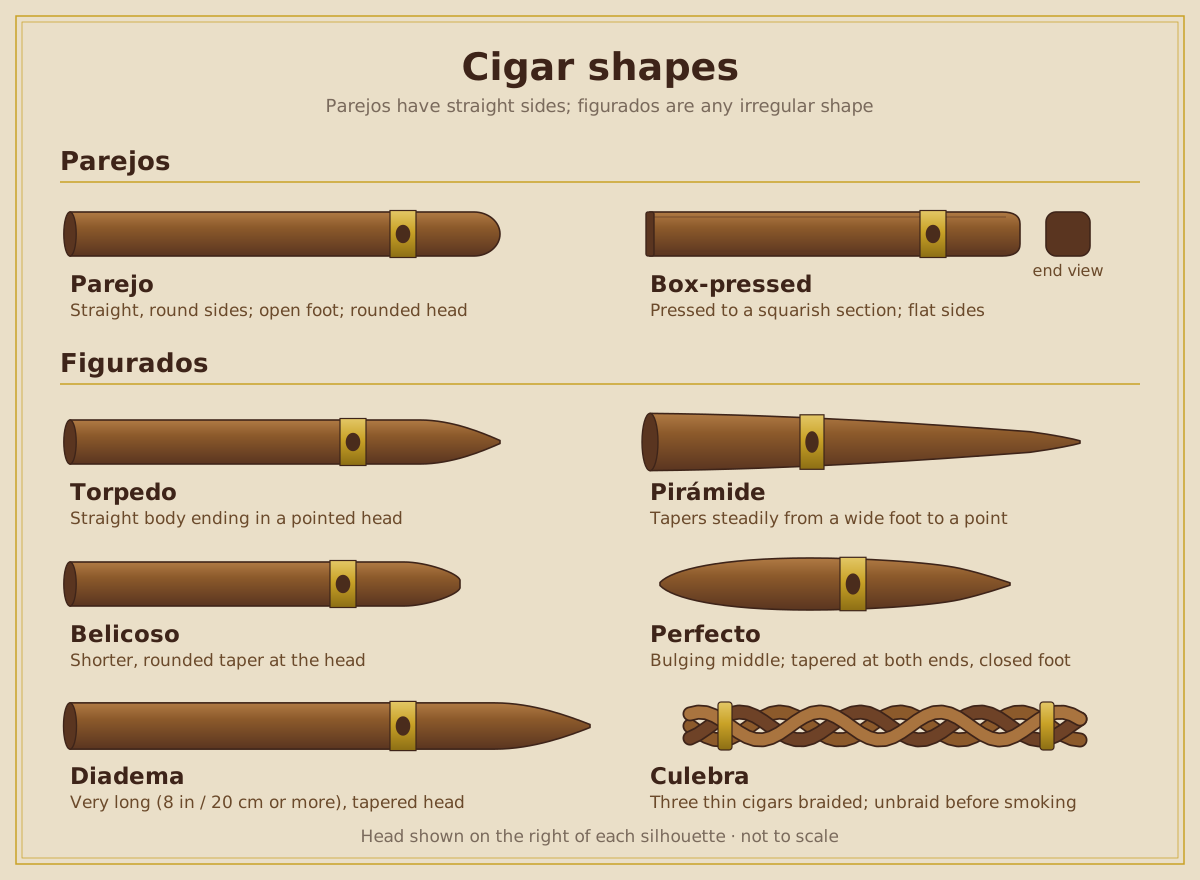
A parejo is a straight-sided cigar with a round head and an open, flat foot. Most cigars are parejos. Corona, robusto, toro, churchill and lancero are all parejo sizes, which differ only in length and thickness.
Parejos are simple to cut and light. Because of that, they suit beginners well. They also show off a blend cleanly, since the shape does not change the draw along the way.
Figurados
A figurado is any cigar with an irregular shape. The head may come to a point, the foot may be closed, or the body may bulge. Figurados are harder to roll, so they often cost more. Their shape also changes how the smoke concentrates, which many smokers enjoy.
These are the figurado shapes you will see most often:
- Pirámide. The cigar tapers steadily from a wide foot to a pointed head. Montecristo No. 2 is the classic Cuban example.
- Torpedo. Usually a straight body with a pointed head. Many brands use “torpedo” and “pirámide” interchangeably.
- Belicoso. A shorter cigar with a short, rounded taper at the head. It is often around 5 to 5 1/2 inches long.
- Perfecto. Tapered at both ends, with a bulge in the middle. The foot is often closed, so the first puffs are small and concentrated.
- Diadema. A very long figurado, often over 8 inches, with a tapered head and sometimes a closed foot. It is rare and takes hours to smoke.
- Culebra. Three thin cigars braided together and tied with string. You untie them and smoke each one separately. It is more of a curiosity than an everyday cigar.
Box-pressed cigars
A box-pressed cigar has a squarish cross-section instead of a round one. Makers achieve this by packing cigars tightly into a box, or by pressing them in a mould. Box-pressing is not a separate shape family. Instead, it can apply to a parejo of almost any size.
Some smokers say a pressed cigar burns more evenly and sits more comfortably in the mouth. Others notice little difference. Either way, it is a matter of taste rather than quality.
Types of cigars by size (vitola)
Size is the next filter. In the cigar world, size and shape together are called the vitola. Size has two parts: length, measured in inches or millimetres, and ring gauge, the diameter in 64ths of an inch. So a 50 ring gauge cigar is 50/64 of an inch across.
Here is a summary of the most common sizes. Exact dimensions vary between brands, so treat these as typical figures.
| Size name | Typical length | Typical ring gauge | Rough smoking time |
|---|---|---|---|
| Petit corona | 4 1/2–5 in | 40–42 | 30–45 minutes |
| Corona | 5 1/2–6 in | 42–44 | 45–60 minutes |
| Robusto | 4 7/8–5 1/2 in | 48–52 | 45–60 minutes |
| Toro | 6 in | 50–54 | 60–90 minutes |
| Churchill | 7 in | 47–50 | 75–120 minutes |
| Lonsdale | 6 1/2 in | 42–44 | 60–75 minutes |
| Lancero | 7–7 1/2 in | 38–40 | 60–90 minutes |
| Gordo | 6 in | 60 | 90 minutes or more |
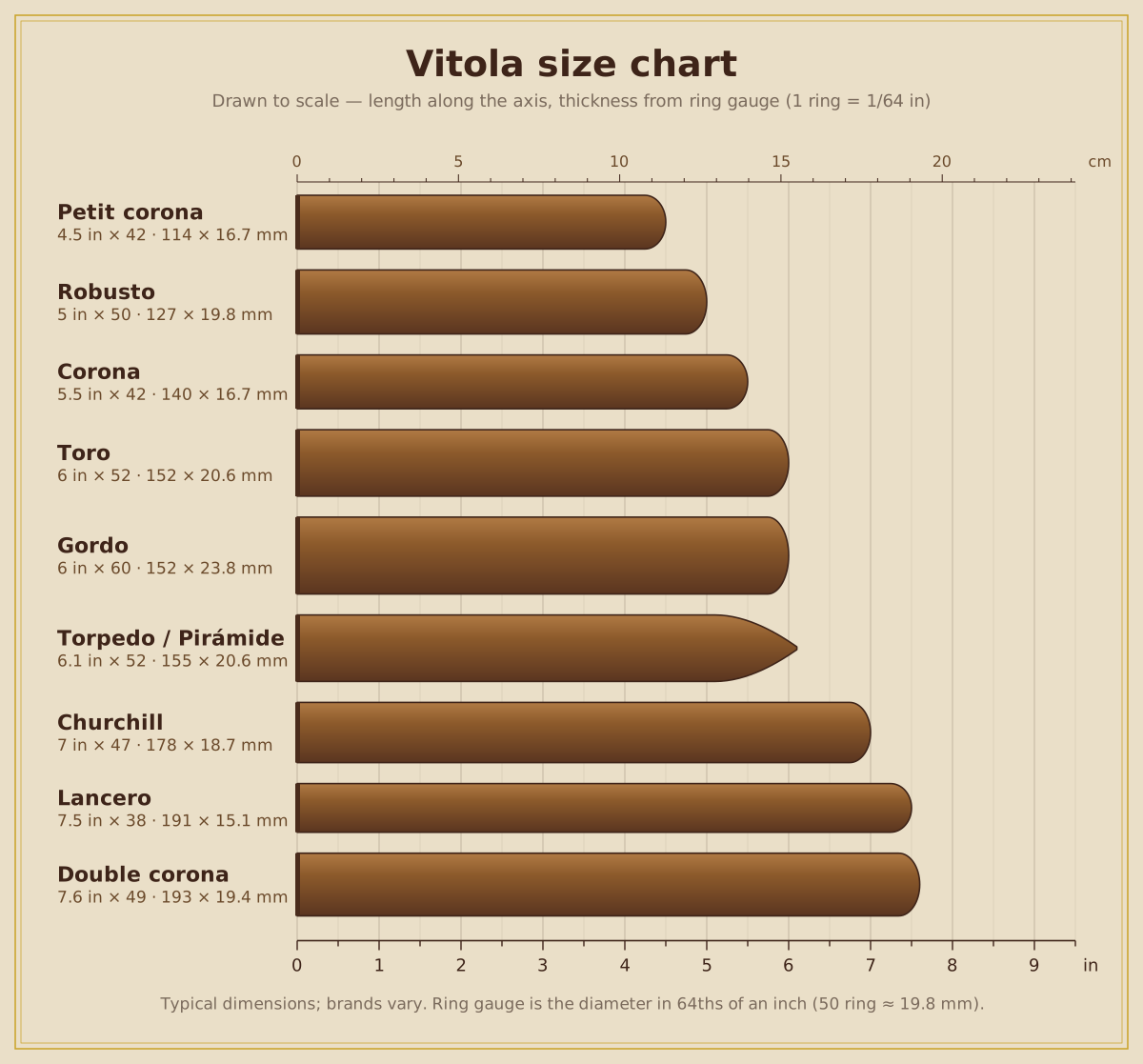
Size changes more than smoking time. A thin cigar has a higher ratio of wrapper to filler, so the wrapper’s flavour comes through more. A thick cigar burns cooler and lets more of the filler blend show. For the full chart, including Cuban factory names, see our guide to cigar sizes.
Types of cigars by wrapper colour
The wrapper is the outer leaf, and its colour is the first thing you notice. Colour comes from the tobacco variety, how much sun the plant gets, which part of the plant the leaf comes from and how long it ferments.
| Colour grade | Appearance | Typical flavour direction |
|---|---|---|
| Candela (double claro) | Green | Grassy, mild, slightly sweet |
| Claro | Pale tan | Light, creamy, nutty |
| Colorado claro | Light brown | Mild to medium, toasty |
| Colorado | Reddish brown | Rich, aromatic, a little spice |
| Colorado maduro | Dark brown | Deeper, earthy, cocoa |
| Maduro | Very dark brown | Sweet, coffee, dark chocolate |
| Oscuro | Nearly black | Intense, earthy, heavy sweetness |
Remember that colour is a guide to flavour, not strength. A pale Connecticut-wrapped cigar can hide a strong filler, and a dark maduro can be quite mellow. Our guide to cigar wrappers covers colour grades, seed varieties and the maduro process in detail.
Types of cigars by strength
Strength is about how much nicotine you feel and how heavy the smoke seems. Cigar people often separate two ideas here. Strength is the physical impact, mostly from nicotine. Body is the weight and richness of the smoke on your palate.
Most cigars fall into three broad bands:
- Mild. Smooth and light, often with a Connecticut shade wrapper. Many beginners start here.
- Medium. The largest group. Balanced, with more depth but less punch than full-bodied cigars.
- Full. Heavy, rich and potent. These often contain plenty of ligero, the strong leaf from the top of the plant.
Strength labels are not standard across brands. One maker’s “medium” can feel like another’s “full”. Also, strength depends on you: smoking on an empty stomach makes any cigar feel stronger. Our cigar strength guide explains how to judge it.
Health note
Every type of cigar contains nicotine and produces smoke that carries cancer-causing chemicals, whether or not you inhale. Mild cigars are not safe cigars. Read our guide to cigar health risks before you start.
Types of cigars by origin
Where the tobacco grows shapes its character, much as with wine. Soil, climate and local seed varieties all play a part. In addition, each country has its own rolling traditions.
| Origin | Typical style | Learn more |
|---|---|---|
| Cuba | Earthy, aromatic, often medium-bodied; all leaf grown in Cuba | Cuban cigars |
| Dominican Republic | Often smooth, refined and balanced; the largest premium producer | Dominican cigars |
| Nicaragua | Often bold, peppery and full-bodied, especially from Estelí | Nicaraguan cigars |
| Honduras | Robust and earthy, with a long Cuban-seed tradition | Honduran cigars |
| Others | Mexico, Ecuador, Brazil, Indonesia, Cameroon and more, often as wrapper or blend components | Other origins |
These are generalisations, of course. A Nicaraguan cigar can be mild, and a Dominican cigar can be powerful. Still, origin is a useful starting point when you are working out what you like. It also matters in Malaysia, because Cuban cigars are common in local specialist shops and duty-free outlets.
What types of cigars you will see in Malaysia
In Malaysia, the word “cigar” covers two very different worlds. Knowing which one you are looking at saves a lot of confusion.
Convenience-store cigarillos
The cigars you see at a convenience store counter are almost always machine-made cigarillos or little cigars. Many are flavoured or tipped. Under Act 852’s display rules, most shops now keep them out of sight behind the counter. They come in packs or tins and are closer to cigarettes in size, burn and price than to a premium cigar. Our guide to convenience-store cigars in Malaysia explains what these products are and how they differ from hand-rolled cigars.
Premium cigars in specialist shops and lounges
Premium hand-rolled cigars live in a different setting. In Malaysia you mostly find them in specialist tobacconists with walk-in humidors, hotel cigar rooms, lounges and airport duty-free shops. Cuban brands are well represented. Dominican, Nicaraguan and Honduran cigars also appear, though the range varies widely.
Because of Malaysia’s high humidity, a premium cigar needs careful storage once it leaves a humidified shop. Outdoors, humidity often sits between 70 and 90 per cent. Air-conditioned rooms, by contrast, dry cigars out fast. Our guide on how to store cigars explains how to keep them in good condition.
Rules in Malaysia
Cigars are regulated under the Control of Smoking Products for Public Health Act 2024 (Act 852), which covers sale, display, advertising and where you may smoke. See our guide to cigar laws in Malaysia for details.
Other labels you will see on boxes and bands
Beyond the six scales, a few extra terms turn up on boxes, bands and menus. They do not create new types of cigars as such. Instead, they tell you something about how a cigar was blended, released or aged.
Puro or blend
A puro uses wrapper, binder and filler from a single country. All Cuban cigars are puros by definition, since Cuba grows all its own leaf. Many Nicaraguan and Dominican cigars are puros too. A blend, by contrast, might pair an Ecuadorian wrapper with a Mexican binder and Nicaraguan filler. Blenders do this to build a particular flavour, so a blend is not a lesser cigar.
Cuban and “Cuban seed”
A Cuban cigar is grown and rolled in Cuba. A “Cuban seed” cigar is something else. It uses tobacco grown from Cuban-descended seed in another country, such as Nicaragua or Honduras. The phrase describes the plant variety, not the origin. If authenticity matters to you, our guide to fake Cuban cigars explains what to check.
Limited and regional editions
Habanos S.A., the company that markets Cuban cigars worldwide, releases an annual Edición Limitada series. These cigars use wrapper leaf aged for longer than usual and often come in sizes outside the regular range. Regional editions are another Cuban category. They are made for one market or region, often in a size that the brand does not normally produce.
Non-Cuban makers have their own limited runs too. These often carry words like “reserva”, “limited” or “anniversary”. Such names have no fixed legal meaning, so read them as marketing language rather than a guarantee.
Aged and vintage cigars
Some cigars carry an age statement, or a box date that tells you when they were packed. Many smokers believe that premium cigars mellow and blend with careful ageing over a few years. That only works with stable humidity and temperature, though. In Malaysia’s heat, poor storage can bring mould or tobacco beetles long before any benefit appears. Our guide on how long cigars last covers this.
How to choose between the types of cigars
With so many options, it helps to work through the scales in order. Start with construction, because that sets your expectations. If you want a slow, evolving smoke, look at premium long-filler cigars. If you only have twenty minutes, a cigarillo or small premium cigar might fit better.
Next, choose a size for the time you have. A petit corona suits a short break, while a churchill needs a long evening. Then think about flavour. A lighter wrapper usually means a creamier smoke, and a dark wrapper usually means more sweetness and depth. Finally, pick a strength that matches your experience.
Here is a simple starting point for newcomers:
- Pick a premium, long-filler cigar rather than a flavoured cigarillo, so you taste the tobacco itself.
- Choose a corona or robusto. Both are easy to handle and take under an hour.
- Start mild to medium. You can always move to fuller cigars later.
- Try two origins side by side over time, such as a Cuban and a Dominican, to learn the contrast.
Our guide to cigars for beginners goes further, with advice on cutting, lighting and pacing your first smoke.
Where to go next
Each scale in this guide has its own deeper page. For sizes and the full vitola chart, read our guide to cigar sizes. Colours and seed types live in our guide to cigar wrappers. Meanwhile, the parts of a cigar guide shows how a cigar is built.
If you are curious about the smaller end of the market, our guide to cigarillos explains them in plain terms. And if a word in this guide was new to you, our cigar glossary defines it in a sentence or two.
Frequently asked questions
What are the main types of cigars?
The broadest split is by construction: premium hand-rolled long-filler cigars, mixed or short-filler cigars, machine-made cigars, cigarillos and little cigars. Within premium cigars, people then sort by shape (parejo or figurado), size or vitola, wrapper colour, strength and country of origin.
What is the most popular cigar shape?
The robusto, a short and fairly thick parejo of about 4 7/8 to 5 inches with a 50 ring gauge, is widely regarded as the most popular premium size today. The toro and the corona are also very common.
What is the difference between a torpedo and a pirámide?
Both have a pointed head. Usage varies, but a pirámide usually tapers steadily from foot to head, while a torpedo often has a straight body and a shorter taper near the head. In practice many brands use the two names loosely.
Are darker cigars stronger?
Not necessarily. Wrapper colour mostly reflects how the leaf was grown, harvested and fermented. Darker wrappers often taste sweeter and richer, but strength comes mainly from the filler blend, especially the amount of ligero leaf.
What kind of cigar should a beginner try first?
Most tobacconists suggest a mild to medium premium cigar in a manageable size, such as a corona or robusto with a lighter wrapper. Our guide to cigars for beginners covers this in more detail. Remember that no cigar is safe to smoke.
Are cigarillos a type of cigar?
Yes. Cigarillos are small cigars, usually machine-made with short filler. They are thinner and shorter than a premium cigar and are often sold in tins or packs. See our guide to cigarillos.