Learning how to cut a cigar takes about a minute, yet it decides how the next hour goes. Cut too little and the draw feels like sucking through a straw. Cut too much and the wrapper peels apart in your mouth. The good news is that one simple rule, and a sharp tool, solves almost every problem.
Why you need to cut a cigar at all
A premium, hand-rolled cigar is closed at the head by a small round piece of wrapper leaf called the cap. The cap holds the wrapper in place, so the roller glues it on with a dab of natural, flavourless vegetable gum. Until you open it, no smoke can pass through.
Machine-made cigars and most cigarillos are different. Many come pre-cut or have an open, tipped end, so they need no cutting at all. If you are not sure which kind you have, our guide to hand-rolled vs machine-made cigars explains the difference.
The golden rule: stay above the cap line
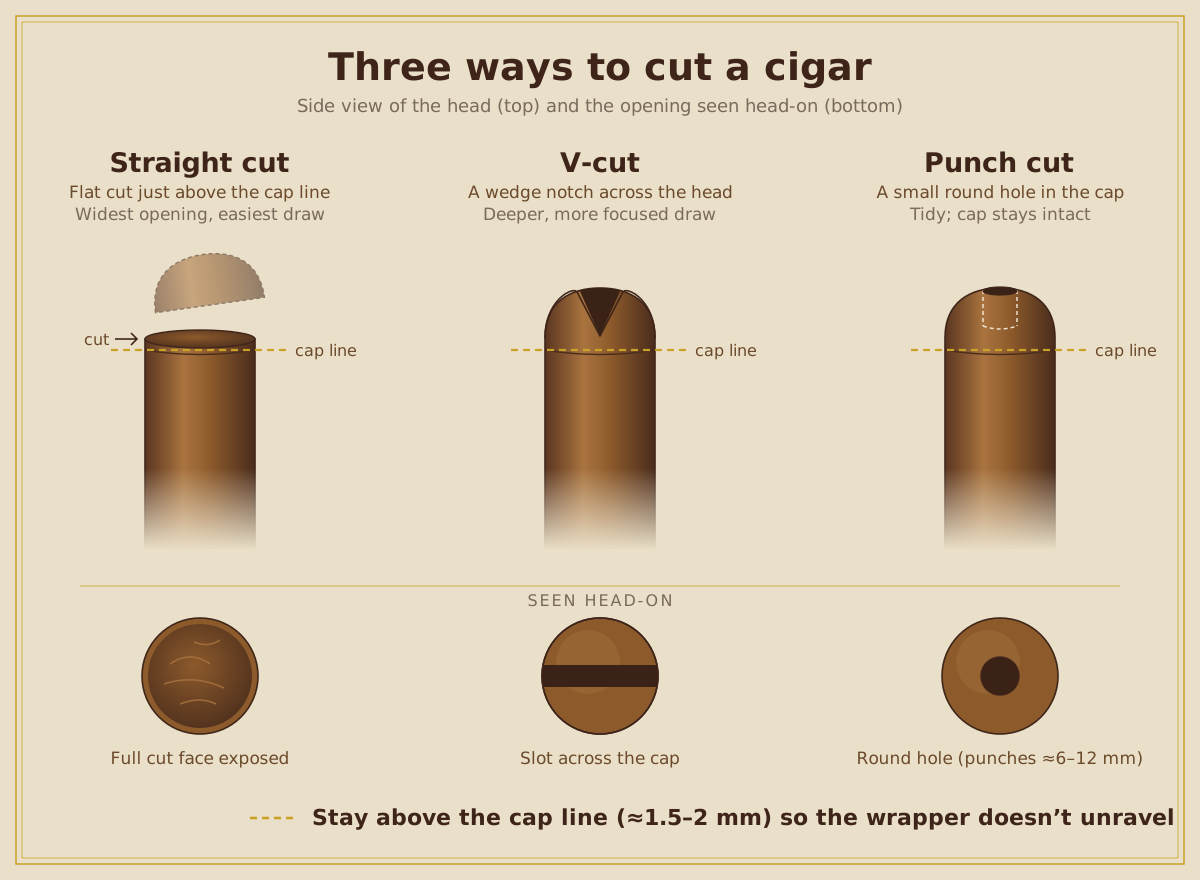
Look closely at the head of the cigar. You will see a faint ring where the cap meets the rest of the wrapper. That ring is the cap line. As long as your cut stays above it, the wrapper stays anchored.
In practice, this means removing about 1.5 to 2 mm, roughly the thickness of a coin. Some cigars have a triple cap, a Cuban hallmark of three overlapping layers. With those, you can cut through the first layer or two and still keep the wrapper secure.
Start small
You can always cut more, but you can never put tobacco back. If the draw is tight after a first thin cut, simply take a second sliver.
The four cuts compared
Each cut opens the head in a different way. As a result, each one changes how the smoke reaches your palate.
| Cut | Tool | Draw | Best for | Watch out for |
|---|---|---|---|---|
| Straight (guillotine) | Single- or double-blade cutter, cigar scissors | Most open | Almost any cigar; beginners | Cutting below the cap line |
| V-cut (wedge) | V-cutter | Focused, slightly firmer | Robustos, parejos up to about 54 ring gauge | Tar build-up on long smokes |
| Punch | Bullet or barrel punch | Firmer, concentrated | Large ring gauges, rounded heads | Useless on pointed torpedoes |
| Bite or tear | Your teeth | Uneven | Nothing, really | Torn wrapper, loose tobacco |
Straight cut
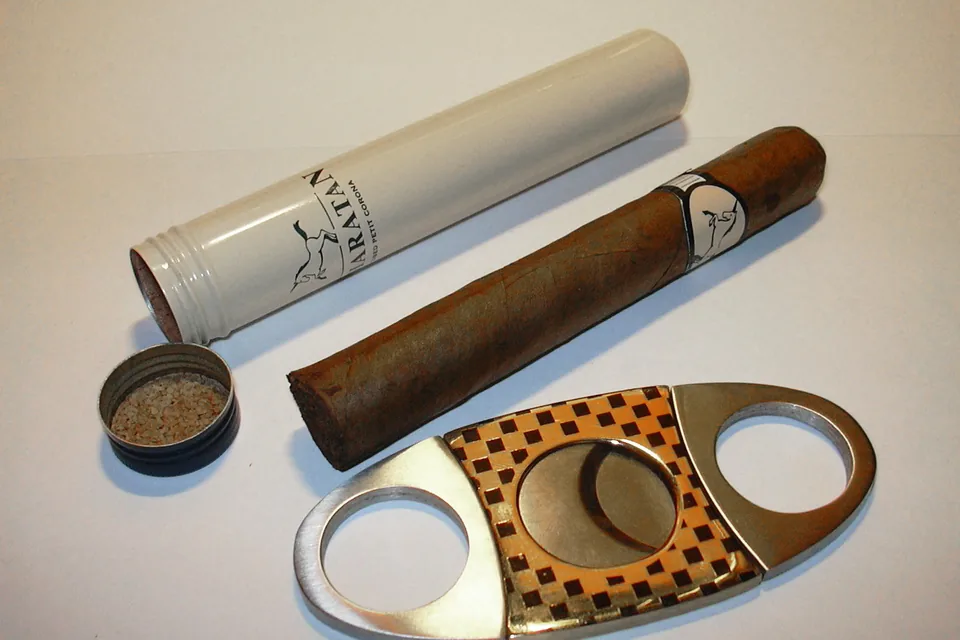
The straight cut is the most common choice and the most forgiving. You slice the cap off flat with a guillotine. Ideally, use a double-blade model rather than a single blade, because the two blades meet in the middle and squeeze the head evenly. A single blade pushes against one side and can tear the wrapper.
V-cut
A V-cutter carves a wedge-shaped notch across the head. It leaves more of the cap intact, so the wrapper is secure. It also directs the smoke towards the centre of your tongue, which some smokers like with bold Nicaraguan cigars. However, on very large ring gauges the wedge may be too narrow to give an easy draw.
Punch cut
A punch is a small circular blade that you twist into the cap. It removes a neat plug of tobacco and leaves the edges of the cap in place. Punches are pocket-friendly and great for big, rounded heads. That said, they do not work on figurados such as torpedoes, because the pointed head is too narrow.
Biting or tearing
Biting the cap off is the cigar equivalent of opening a bottle with your teeth. It works, but it is messy. The tear is ragged, loose tobacco ends up in your mouth, and the wrapper often splits. Instead, keep a simple cutter in your bag so you never have to.
How to cut a cigar step by step
These steps use a double-blade guillotine, since that is the tool most people start with. The same logic applies to every other cutter.
- Find the cap line. Hold the cigar head up and locate the faint seam where the cap meets the wrapper.
- Open the cutter fully. Slide the head in so the blades sit about 1.5–2 mm from the tip.
- Hold it level. Keep the cigar and cutter perpendicular, so the cut is flat rather than angled.
- Cut in one quick motion. Squeeze firmly and fast. A slow squeeze crushes the head.
- Test the draw. Draw air through the unlit cigar. If it is tight, take another thin slice.
Once the draw feels right, you are ready for the next stage. Our guide on how to light a cigar covers toasting the foot and keeping an even burn.
Cutting a torpedo or other figurado
A torpedo or pyramid has a pointed head. Because of this, you can change the draw simply by choosing where to cut. Cutting near the tip gives a tight draw and concentrated smoke. Moving the cut further down opens the draw and lets more smoke through.
For a first try, cut about a third of the way down the taper. Then test the draw and adjust. Never use a punch on a torpedo, since the point is too thin for the blade.
Common mistakes and how to avoid them
Most cutting problems come down to the tool, the technique or the cigar’s condition. Here are the ones we see most often.
- A dull blade. A blunt cutter crushes rather than slices. Even a low-cost guillotine works well when it is sharp, so replace it once it starts to drag.
- Cutting too deep. Below the cap line, the wrapper loses its anchor and starts to unravel.
- Hesitating. A slow, nervous cut squashes the head. Commit to one smooth motion.
- Cutting a dry cigar. A cigar stored too dry becomes brittle and may crack when cut.
- Cutting a wet cigar. In contrast, a cigar that is too moist feels spongy and tears easily.
Cutting cigars in Malaysia’s climate
Malaysia’s outdoor humidity often sits between 70 and 90 per cent. That is wetter than the 65 to 70 per cent most cigars prefer. A cigar left out on a terrace, or carried around in a pocket all day, can absorb moisture and turn soft. Soft cigars tear more easily when you cut them.
The opposite happens indoors. Air-conditioning dries the air quickly, so a cigar left on a desk under the vent can become brittle within days. For both reasons, the best habit is to store cigars properly and cut them just before you smoke. Our pillar guide on how to store cigars explains how to hold them at the right humidity in the tropics.
Carrying a cutter when travelling
Cutters with blades are generally not allowed in aircraft cabin baggage, and rules vary by airline and airport. Pack your cutter in checked luggage, and see our guide to cigar cases and travel before you fly.
Choosing a cutter
You do not need an expensive tool. In fact, a sharp, well-made double-blade guillotine does the job for almost every cigar. Later, many smokers add a punch for large ring gauges and a V-cutter for variety. Our guide to cigar cutters compares the designs, blade materials and what to look for, without pointing you to any particular shop.
Frequently asked questions
How much of a cigar should you cut?
Usually 1.5–2 mm, or about one-sixteenth of an inch. You want to open the cap but stay above the cap line, the faint seam where the cap joins the wrapper. Cutting below it lets the wrapper unravel.
Which end of the cigar do you cut?
You cut the head, the closed and rounded end that goes in your mouth. The foot, the open end where you can see the tobacco, is the end you light.
Can you cut a cigar with scissors or a knife?
You can in an emergency, but the result is rarely clean. A very sharp knife works better than scissors. Roll the cigar under the blade on a hard surface rather than pressing straight down.
Why does my cigar wrapper unravel after cutting?
The cut went below the cap line, the blade was dull, or the cigar was too dry or too wet. See our guide on how to store cigars to keep the wrapper supple in Malaysia’s climate.
Is a V-cut or a straight cut better?
Neither is better for every cigar. A straight cut gives the most open draw. A V-cut concentrates the smoke and stops loose tobacco reaching your tongue, but it can tar up on a long smoke.