Ashton cigars began with a tobacconist rather than a tobacco grower. Robert Levin, whose family ran a well-known cigar shop in Philadelphia, created the brand in 1985. From the start he partnered with the Fuente family, who still roll the core lines in the Dominican Republic. This profile covers the history, the makers, the main lines and the house style.
A tobacconist’s brand
Robert Levin grew up in the trade. For years he helped his father run Holt’s Cigar Company, a Philadelphia tobacconist. So he knew what smokers asked for at the counter.
In 1985 he launched his own brand. Rather than build a factory, he chose a partner to make the cigars. That partner was the Fuente family, then recently settled in Santiago, Dominican Republic. The partnership suited both sides, and it has lasted for four decades.
Today the Levin family still runs the business, with Robert’s son Sathya also active in it. That makes Ashton one of the older family-owned brands in the American market.
Where the name comes from
The name has nothing to do with a place or a founder. Instead, Levin borrowed it from Ashton pipes, an English pipe brand. The pipe maker Bill Ashton-Taylor started that brand in 1983 and built a fine reputation.
Levin felt the name suggested quiet quality. As a result, Ashton cigars took on a calm, understated image, and the packaging still keeps that classic look.
Made by the Fuente family
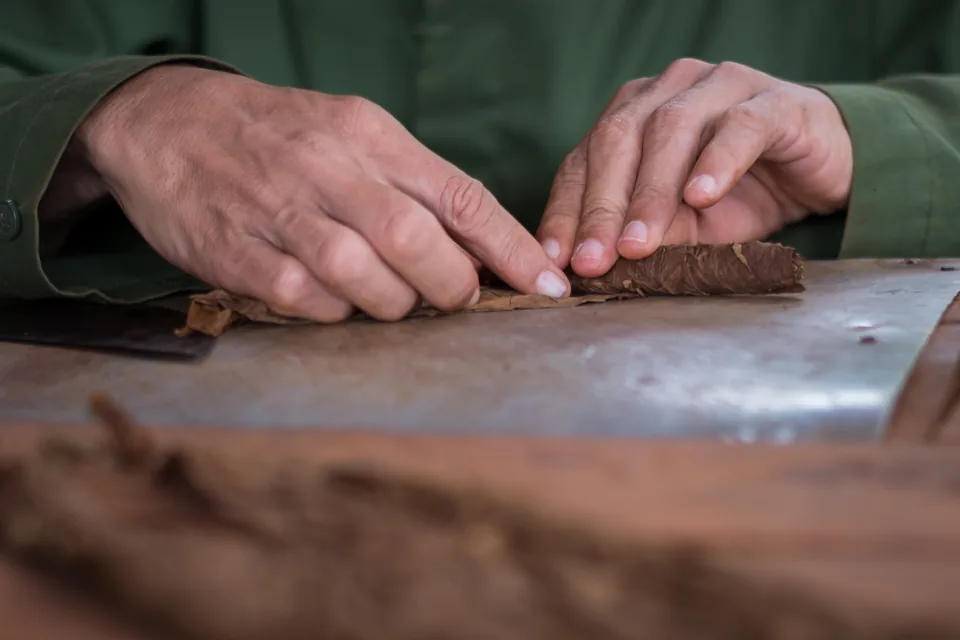
The core Ashton lines come from the Fuente factory in the Dominican Republic. Our profile of Arturo Fuente tells that family’s story, from Tampa to Santiago.
The link goes deeper than rolling. For example, the Ashton ESG uses wrapper from Château de la Fuente, the farm where the Fuentes grow OpusX leaf. However, not every Ashton brand comes from Fuente. Sister brands such as La Aroma de Cuba use other makers, including the García family behind My Father.
Main lines of Ashton cigars
Here are the lines most smokers know, all made in the Dominican Republic.
| Line | Wrapper | Strength |
|---|---|---|
| Ashton Classic | Connecticut shade | Mild |
| Cabinet Selection | Connecticut shade, longer-aged | Mild to medium |
| Aged Maduro | Connecticut broadleaf maduro | Medium |
| VSG (Virgin Sun Grown), 1999 | Ecuadorian Sumatra, sun-grown | Full |
| ESG (Estate Sun Grown) | Dominican sun-grown, Château de la Fuente | Medium to full |
The Classic is the original. It wears a pale Connecticut shade wrapper and smokes smooth and creamy. In contrast, the VSG uses a dark sun-grown leaf and is much bolder, with pepper, espresso and leather.
The Aged Maduro sits between them. Its dark broadleaf wrapper adds a sweet, cocoa-like note, yet the cigar stays fairly gentle. Meanwhile, the Cabinet Selection uses longer-aged tobacco for a rounder smoke than the Classic.
House style
In general terms, Ashton favours balance and polish over power. The Connecticut-wrapped lines are soft, nutty and creamy. Meanwhile, the sun-grown lines add spice and weight but still aim for smoothness.
Because Fuente rolls them, the cigars share that factory’s reputation for careful construction. Many smokers also note a family likeness between Ashton and Fuente cigars.
Strengths and criticisms
On the plus side, Ashton cigars have a strong record for consistency. The range offers a clear path from mild to full within one name. In addition, the 40-year partnership with Fuente is rare in a trade where makers often change.
Still, there are common criticisms. Some smokers find the Classic too mild and plain. Others feel the brand charges a premium for its name and its Fuente link. Finally, rare lines such as ESG can be hard to find.
Ashton in Malaysia
Ashton is a niche brand in Malaysia. Local search interest is very low, and non-Cuban cigars tend to be harder to find than Habanos. Even so, the brand is well known in the US, so Malaysian smokers often meet the name in American cigar media.
Malaysia’s humid air can also make mild, thin-wrapped cigars soft and prone to mould, so good storage matters. If you are just starting out, our beginner’s guide can help you choose a size. Mild cigars still carry real risks, so read our page on cigar health risks. And if you travel, check our guide to bringing cigars into Malaysia.
Where to read more
- Dominican cigars: Santiago and the Cibao valley
- Arturo Fuente: the family that rolls Ashton
- Cigar brands: every profile in our directory
Frequently asked questions
Who makes Ashton cigars?
The Fuente family rolls the core Ashton lines at its factory in the Dominican Republic. Ashton’s sister brands, such as La Aroma de Cuba, come from other makers, including the García family of My Father Cigars.
What does VSG stand for?
Virgin Sun Grown. Ashton launched it in 1999 with a dark, sun-grown Ecuadorian Sumatra wrapper and is the strongest of the classic Ashton lines.
Are Ashton cigars good for beginners?
The Ashton Classic and Cabinet Selection are mild and smooth, so many people start with them. The VSG is much fuller. Our beginner’s guide has more advice.
What is Ashton ESG?
Estate Sun Grown. It uses a rare sun-grown wrapper from the Fuente family’s Château de la Fuente farms and appears in small batches.